Russia Schedules Sarmat ICBM Deployment for Late 2026 After Test Flight
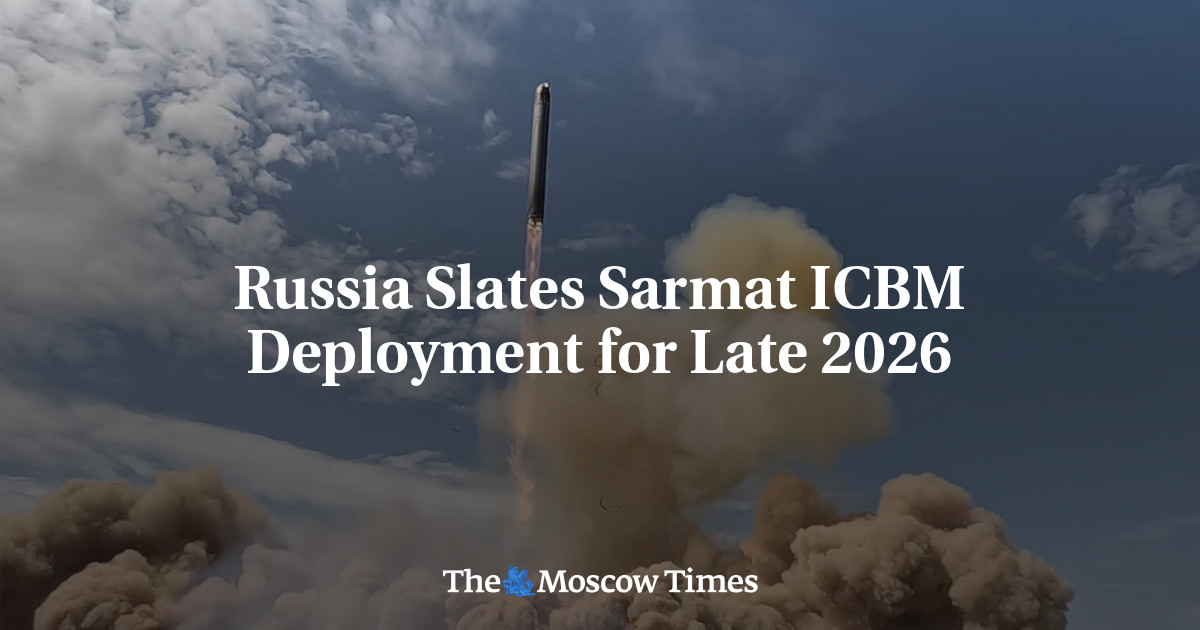
The Sarmat deployment timeline collides with two active escalations: Iran has already fired on US destroyers in the Strait of Hormuz (May 8-12), and Taiwan's legislature just cut defense spending on May 8, signaling political fracture.
If Russia operationalizes Sarmat while the US is stretched across Hormuz escort rotations and Taiwan contingency planning, Moscow gains a 6-month window where US strategic reserves are committed elsewhere.
The Navy's $65.8B 30-year shipbuilding plan (released May 11) assumes a 2029 capacity wall at Newport News and Bath Iron Works — but that plan did not account for sustained Hormuz operations or a hot Taiwan scenario. Sarmat deployment doesn't cause this crunch, but it eliminates the margin for error in which the Pentagon can manage it.
Russia is operationalizing a strategic weapon system at the exact moment when US nuclear command-and-control must assume a two-front deterrence posture — managing both the Hormuz escalation (now in active shooting phase) and Taiwan contingency planning.
The Sarmat's 11,000+ km range and reported 15-warhead capacity force STRATCOM to recompute targeting algorithms and survivability assumptions for US ICBM fields and submarine patrol patterns. This is not signaling — it's a capability insertion into an already-compressed timeline.
Watch whether the Pentagon's nuclear posture review (due FY27) accelerates Sentinel ICBM fielding or triggers an emergency ICBM-basing study.
Does the stated 'late 2026' deployment mean operational readiness by December, or does it mean the first unit moves into a silo? The difference is 6-12 months of actual deterrent effect.
Fault Lines
Strategic intelligence, synthesized daily — with a public track record. Every call graded against what actually happened.