Pentagon restocks GBU-57 bunker-busters after Iran strikes
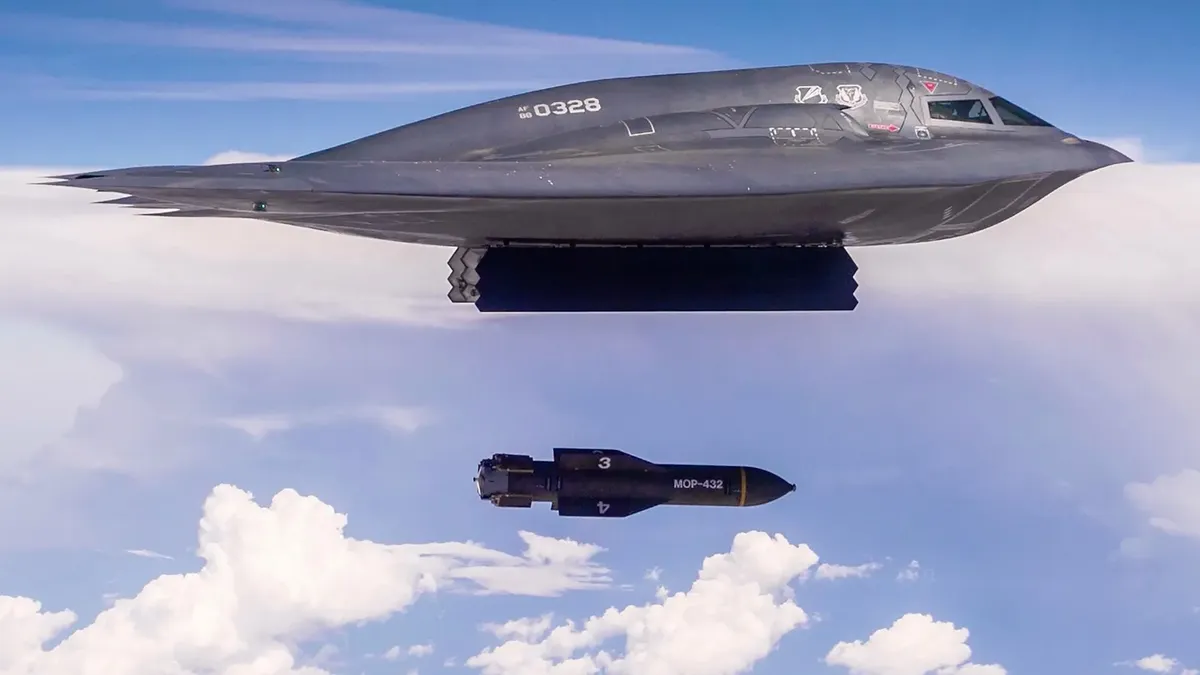
Limited cross-pillar relevance — primarily a Power Projection story. The restock reflects operational depletion from a specific military action and logistics replenishment, not a shift in doctrine, alliance posture, or export control policy. If sustained production increases were announced, that would carry Market Forces implications for Northrop; the current article does not provide that evidence.
This is a straightforward logistics consequence of the Iran strikes, not a strategic shift.
The MOP is a low-density, high-value asset (Northrop Grumman produces it; inventory is estimated in the low hundreds across the entire U.S. arsenal). Restocking confirms the June operation consumed a measurable fraction of available inventory and that DoD judges the risk of future deep-strike requirements against hardened Iranian targets as material enough to rebuild supply.
For program managers: this drives production tempo at Northrop's ordnance division and signals sustained demand for B-2 strike operations. For investors: modest upside to Northrop's precision munitions backlog, but the MOP is a niche program with limited volume.
The real indicator to watch is whether this restock is one-time replenishment or signals a sustained increase in production rate — the article doesn't clarify.
The article does not specify: (1) how many MOPs were expended in the June strikes, (2) what the current inventory level is before restocking, (3) the timeline and dollar value of the restock contract, or (4) whether production rate is increasing or simply returning to baseline.
Fault Lines
Strategic intelligence, synthesized daily — with a public track record. Every call graded against what actually happened.