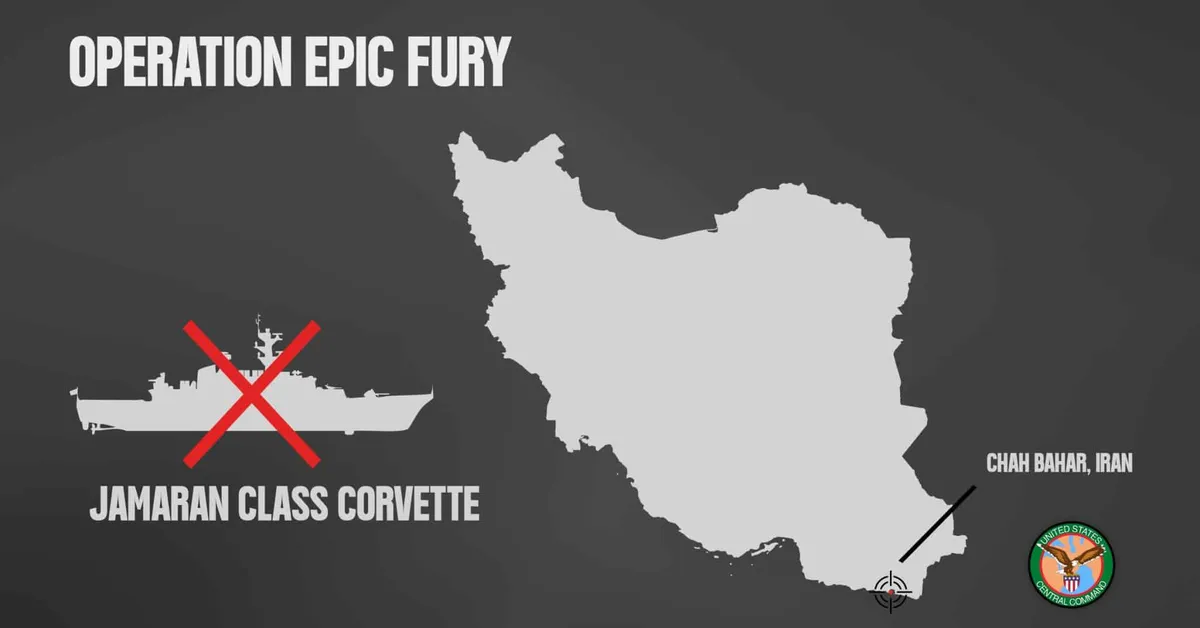
US Strike Sinks Iranian Corvette at Chah Bahar, Initiates Operation Epic Fury
A sustained US campaign against Iranian naval and air assets would compress the timeline for Gulf Cooperation Council navies to upgrade air defense systems and accelerate procurement decisions for US-supplied systems (Raytheon Patriot, Lockheed Integrated Air Defense, General Dynamics THAAD), converting what is now a tactical engagement into a market-forcing event for defense primes.
If Operation Epic Fury extends to Iranian air bases or command infrastructure, the scale of conflict will determine whether commercial shipping insurers reprice Gulf transit premiums, forcing a reallocation of logistics costs across defense supply chains dependent on Strait of Hormuz throughput.
This marks the first reported kinetic engagement between US and Iranian forces in the Gulf since the 2020 Soleimani strike.
The sinking of a Jamaran-class corvette—Iran's primary indigenously-built surface combatant—eliminates one of approximately five operational units and signals US willingness to target Iranian naval assets in contested waters.
The timing and scale of Operation Epic Fury will determine whether this is a limited strike campaign or the opening phase of sustained conflict; either outcome reshapes threat assessments for commercial shipping, regional air defense procurement (particularly for Gulf Cooperation Council states), and US Navy force posture in CENTCOM.
The absence of detail on whether follow-on strikes occurred or are planned prevents assessment of whether this is a one-off demonstration or escalatory momentum.
The article does not specify: what other targets Operation Epic Fury includes; whether the strike was preemptive or retaliatory; Iranian response posture or damage assessment; whether allied forces participated; or any US casualty or aircraft loss data.
Fault Lines
Strategic intelligence, synthesized daily — with a public track record. Every call graded against what actually happened.