US Approves $373.6M JDAM-ER Sale to Ukraine; Boeing Awarded Principal Contractor Role
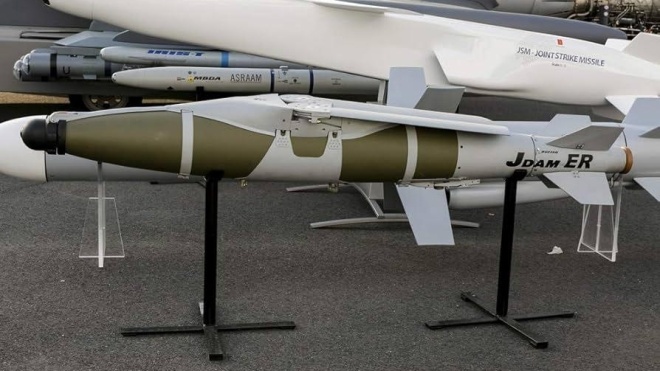
This sale occurs during a critical narrowing of U.S. munitions industrial capacity. If Boeing is locked into JDAM-ER production at scale, the company's Phantom Works division has less flexibility to pivot to other precision-guided programs.
Raytheon and Northrop Grumman are already managing ATACMS, Tomahawk, and hypersonic production backlogs; adding a sustained JDAM-ER commitment to Boeing's schedule means the three primes are now fully allocated across cruise missiles, ballistic missiles, and air-to-ground guidance. This leaves zero surge capacity for a Taiwan contingency that would demand 10,000+ precision-guided munitions in the first 90 days.
Ukraine's munitions consumption rate in the Donbas theater has exceeded 2 million rounds monthly; JDAM-ER kits extend effective range to 45+ nautical miles, enabling strikes on Russian logistics nodes deeper in rear areas without committing aircraft to contested airspace.
The $373.6M commitment signals U.S. intent to sustain Ukraine's strike capability for a 12-month operational window—critical as Russian air defenses degrade Ukrainian rotary-wing assets. Boeing's role as prime contractor locks in a sustained production run, which forces the company to maintain JDAM-ER line capacity even as LRIP decisions for other programs compress factory floor space.
What is the delivery timeline for these 1,532 kits—does the FMS agreement specify quarterly tranches, or is this a single annual allocation? If phased, does the schedule align with Ukraine's current airframe availability, or will kits stack up waiting for delivery platforms?
Fault Lines
Strategic intelligence, synthesized daily — with a public track record. Every call graded against what actually happened.