Nvidia Exits China Market Entirely; Export Controls Backfire Into AI Talent Flight
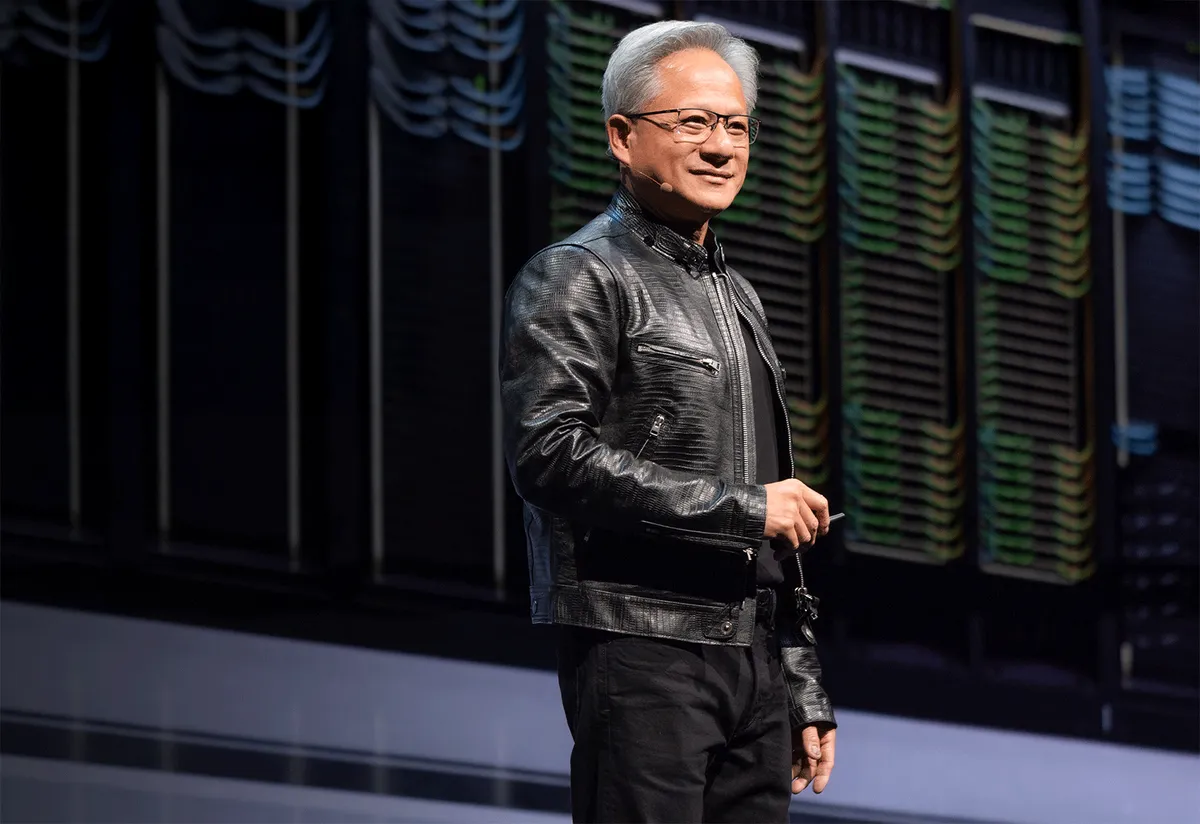
Huang's statement directly contradicts the Trump administration's framing of export controls as leverage (see May 2-3 signals on Iran blockade coercion and shipping sanctions). If controls on semiconductors have backfired into total market loss rather than negotiating advantage, the same logic applies to oil seizures and shipping coercion in the Gulf — you cannot extort a counterparty you have already locked out.
Beijing is no longer negotiating a chip deal; it is building an alternate supply chain. This accelerates the bifurcation of global AI development into U.S.-aligned and China-aligned ecosystems, collapsing the unified semiconductor market that has underpinned allied defense industrial interoperability for 20 years.
This is confirmation that the export control regime has achieved its stated objective — denying China advanced chips — but at a cost the administration isn't prepared to absorb.
Nvidia loses an estimated $8-12B in annual China revenue (pre-2024 levels), forcing a permanent reset of their Asia-Pacific business model. More damaging: Huang's public critique signals that U.S. tech leadership is fracturing from the policy itself.
When the CEO of America's most strategically critical AI firm says the policy backfired, it means Chinese AI labs are now either building indigenous alternatives or sourcing through third countries, accelerating decoupling rather than constraining it.
The real cost isn't Nvidia's lost revenue — it's that Beijing now has no incentive to buy American chips at any price, and every incentive to fund Huawei, SMIC, and domestic GPU makers.
What is Nvidia's actual China revenue run rate now, and how much of the backfill is coming from export-control workarounds (re-exports through Singapore, Vietnam, or gray-market channels)?
Fault Lines
Strategic intelligence, synthesized daily — with a public track record. Every call graded against what actually happened.