House Armed Services Locks 184 F-22 Raptors in Service Through FY2032
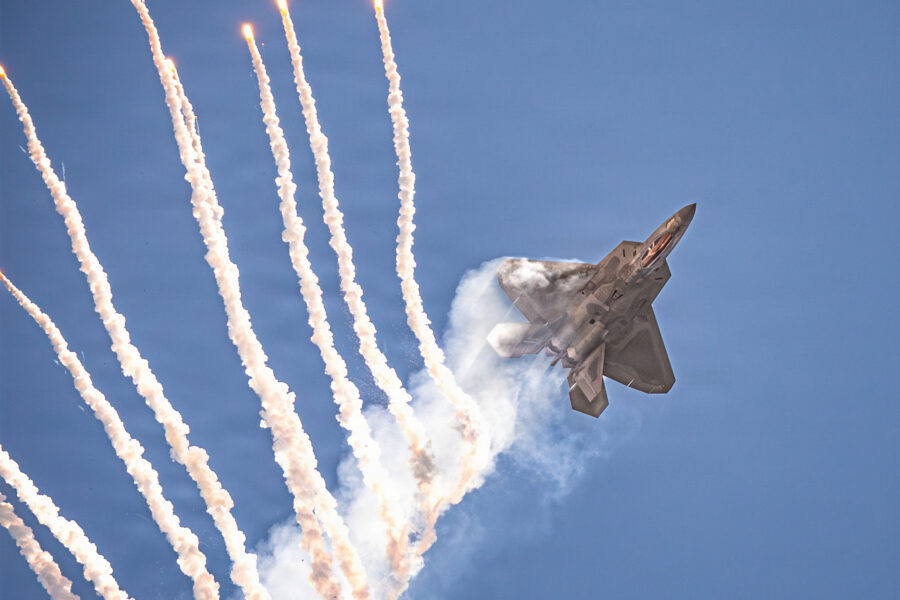
The F-22 fleet is averaging 25–30 years of age. Extending service life to 2032 means the Air Force will be operating a 35–40-year-old fighter during the Taiwan contingency window—when it needs maximum combat-coded sorties, not depot rotations. This forces a trade: either F-35 production slows to absorb F-22 logistics costs, or the Air Force accepts higher F-22 availability risk by deferring major overhauls.
Lockheed Martin's Fort Worth line benefits from extended F-22 sustainment contracts, but Lockheed's Marietta F-35 facility faces pressure if component allocation shifts toward legacy-platform support.
This locks $1.2–1.5B annually into F-22 sustainment and depot maintenance through the 2030s, money that cannot flow to F-35 production acceleration, next-gen fighter development, or munitions stockpiling.
The constraint is timeline and budget authority: Congress is now the binding lever on platform retirement, not Air Force strategy. Watch the FY27 FYDP markup to see whether this extends to other legacy airframes—if the pattern holds, the Air Force loses 4–6 years of recapitalization flexibility across the fighter fleet.
Did the amendment specify which F-22 variants are protected (Block 20, Block 30/32), or does it apply uniformly to all 184 airframes regardless of modernization status? The depot maintenance cost per airframe varies by 30–40% depending on block configuration.
Fault Lines
Strategic intelligence, synthesized daily — with a public track record. Every call graded against what actually happened.