Space Command Acknowledges Iran Operationalized Commercial Satellite Imagery for Targeting; Confirms Structural ISR Gap
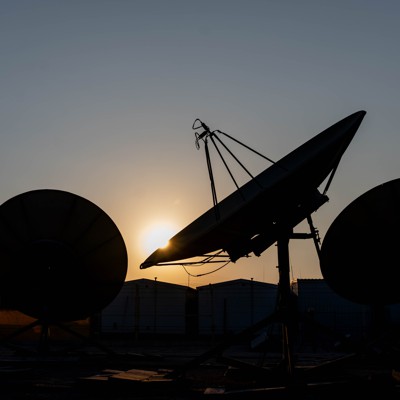
Commercial ISR access eliminates the export-control lever the U.S. relied on to degrade Iranian targeting precision. This forces Space Command to request accelerated procurement of counter-space capabilities (jamming, anti-satellite weapons) that will compete with existing NGAD and hypersonic budgets in FY27.
Simultaneously, Iran's ability to sustain targeting without Chinese state ISR reduces Beijing's leverage over Tehran and signals to other U.S. adversaries that commercial space markets are a reliable alternative to state-provided intelligence — a finding that will drive allied space industrial policy and potentially trigger new export controls on commercial imagery providers themselves.
This is not a new Iranian capability — it is official U.S. military acknowledgment that Iran has found an asymmetric workaround to American space superiority claims.
Commercial satellite imagery (Maxar, Planet Labs, Capella Space) is available to any state with foreign currency and no export license required. The gap exposed is not technical (the U.S. can jam or degrade some signals) but doctrinal: American space doctrine assumes peer competitors rely on classified national systems, not open-market ISR.
Iran's pivot to commercial sources forces a reacquisition cycle at Space Command and complicates rules of engagement for blockade enforcement — the Navy cannot sink a civilian commercial satellite provider without escalating beyond current law of armed conflict frameworks.
This also validates Pakistan's mediation efforts (April 15 signal) by demonstrating Iran retains targeting precision despite blockade, reducing Tehran's incentive to accept early ceasefire terms.
The article does not specify which commercial satellite providers Iran is using, the latency of their imagery (real-time vs. 12-24 hour lag), or whether Space Command has recommended specific counter-measures (e.g., jamming, spoofing, or targeting of Iranian ground control stations).
Fault Lines
Strategic intelligence, synthesized daily — with a public track record. Every call graded against what actually happened.