Australia Adopts Spiral Development for Defense Acquisition; Counters Procurement Delays in Counter-Drone Programs
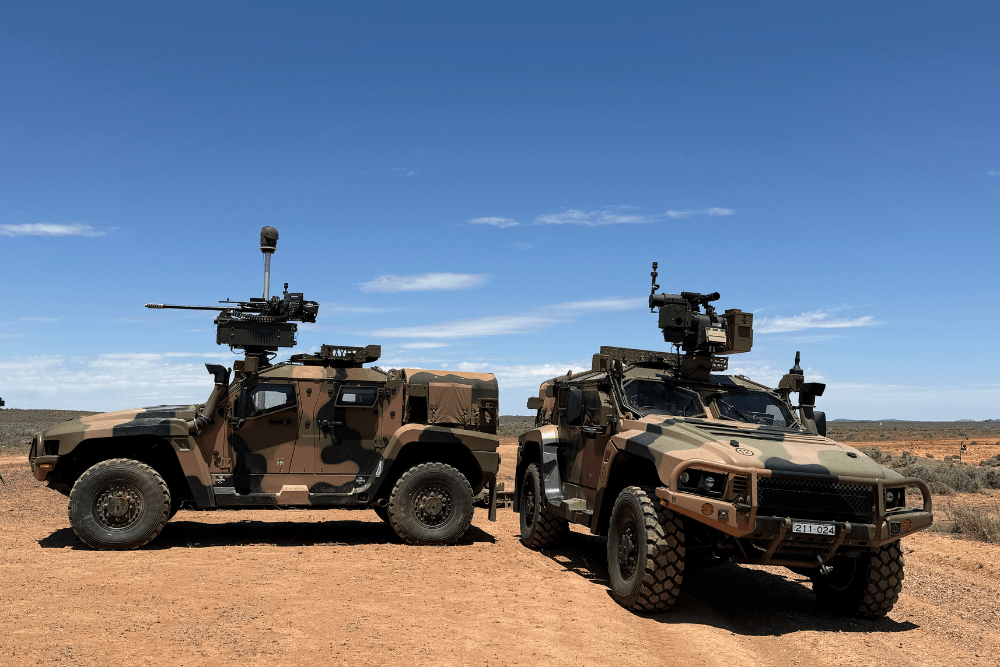
Spiral development in Australian defense signals a structural realignment with AUKUS procurement timelines.
If Australia locks into 12-month spiral cycles for counter-drone systems, it creates a cadence mismatch with US and UK partners who still operate 24-36 month approval gates—forcing either Australian independence in drone defense (and interoperability friction with allied air defense nets) or pressure on US INDOPACOM to adopt spiral cycles for allied systems integration.
The second-order effect: if Australia proves spiral works for counter-drone, expect Defence to demand spiral for maritime autonomous systems (where Australia is co-developing with US under AUKUS) and potentially for NGAD-adjacent systems.
Conroy's commitment signals Australia is abandoning traditional waterfall procurement in favor of agile iteration—a direct response to the mismatch between threat velocity (drone proliferation across Indo-Pacific) and acquisition timelines (18-36 months for traditional approval cycles).
This matters because Australia faces a specific constraint: counter-drone capability gaps are being exposed in real-time by Iranian and Ukrainian drone operations in the Middle East, yet Australian procurement rules still require full specification before contract award.
Spiral development lets Defence procure initial capability in 12 months, then iterate—forcing RAAF, RAN, and Army to operationalize incomplete systems and provide feedback loops that traditional acquisition blocks out. Watch whether the FY27 defence budget amendment (due September 2026) allocates contingency funding for spiral iterations, or whether Conroy's commitment remains rhetorical.
Did Conroy identify which specific counter-drone programs are in the spiral pipeline, or was this a general policy announcement?
Fault Lines
Strategic intelligence, synthesized daily — with a public track record. Every call graded against what actually happened.