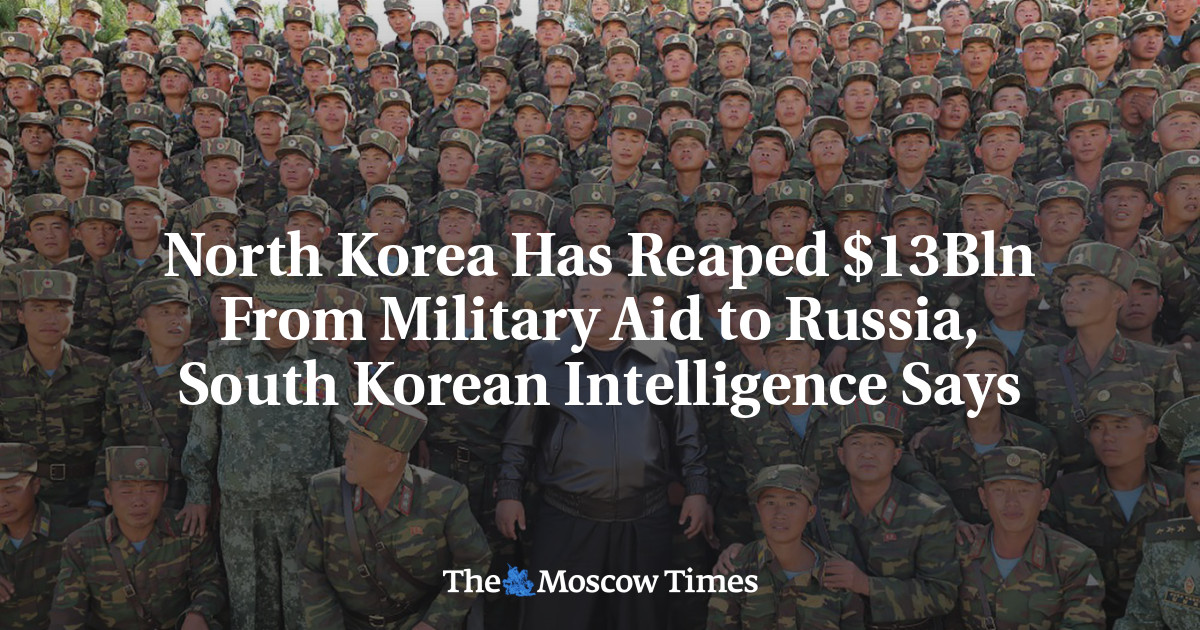
North Korea Nets $13B From Russia Military Aid; Sanctions Evasion Route Accelerates
The capital flow is reshaping North Korean procurement timelines. Historically, DPRK weapons development faced a 5-7 year lag behind peer platforms due to component scarcity and testing constraints. Russian access to Kalashnikov guidance packages, radar systems, and air defense components collapses that lag to 2-3 years.
If North Korea deploys Russian-derived air defense to the DMZ by late 2026—which the recent 155mm SPG deployment suggests is operationally feasible—Seoul's air campaign assumptions for any peninsula contingency become obsolete. South Korea's F-35 and KF-21 procurement timelines, currently built on air superiority assumptions, now face a compressed window to operationalize before DPRK air defense matures.
Seoul's $13B figure—if accurate—establishes that sanctions enforcement against North Korea has functionally collapsed for the duration of the Ukraine conflict.
The mechanism: Russia is paying in direct capital transfers and dual-use technology that bypass OFAC and UN Security Council restrictions because Moscow sits on the Council and blocks enforcement. This creates a 18-24 month window where North Korea can acquire air defense systems, precision guidance, and electronic warfare tech that will be reverse-engineered into DPRK platforms by 2028.
Watch whether US Treasury escalates secondary sanctions against Russian entities conducting these transfers—the current approach (designating Chinese middlemen) leaves the Russia-DPRK pipeline untouched.
Does the $13B figure include technology transfer valuations, or only cash and commodities? If it's primarily cash, how is Pyongyang converting rubles into hard currency—through Chinese banks, or direct barter for energy?
Fault Lines
Strategic intelligence, synthesized daily — with a public track record. Every call graded against what actually happened.