Rheinmetall Wins Multibillion FV-014 Loitering Munitions Framework Amid Hormuz Escalation
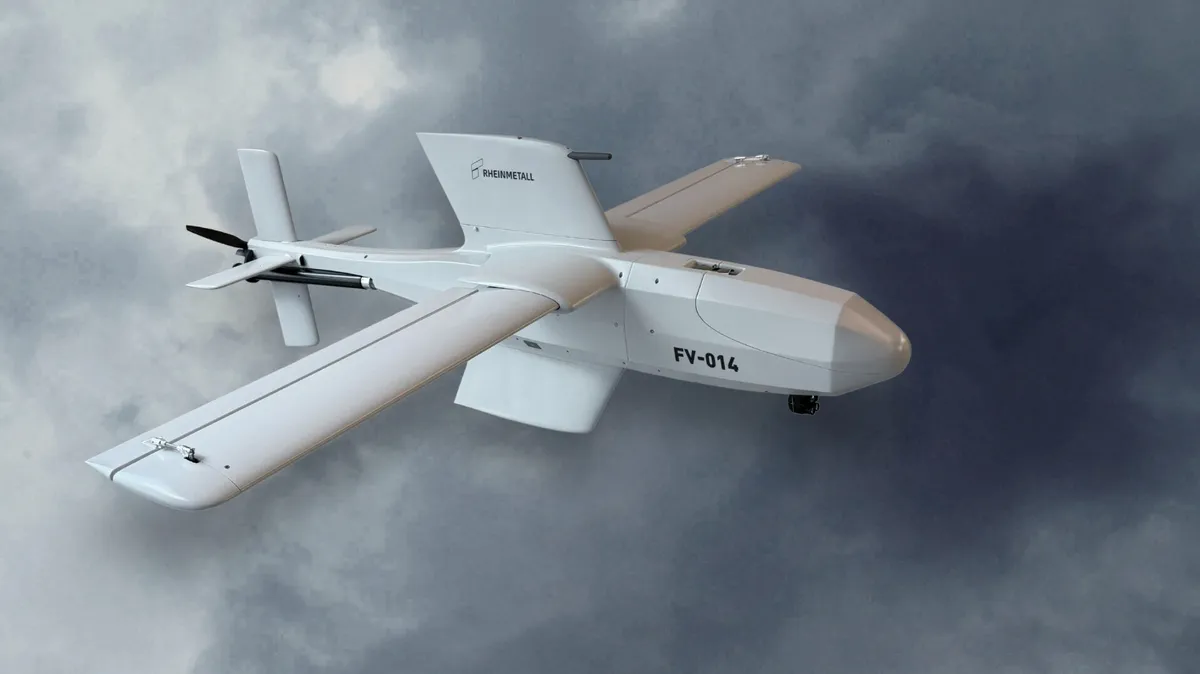
The Hormuz blockade has already forced European defense ministers to demand domestic munitions production (Japan's April 21 call for state-led arms expansion is the parallel signal). Rheinmetall's framework win converts that political pressure into actual procurement, pulling capital from air defense and naval systems into distributed fires.
If the contract includes 500+ units across the framework, European ammunition and propellant supply chains will tighten, delaying other programs. This also positions Rheinmetall to capture NATO's loitering munitions standard—whoever wins the framework often wins the follow-on competitive buys.
This is a pure market win for Rheinmetall in a category that NATO has deprioritized for two decades.
Loitering munitions—kamikaze drones—were niche weapons until Ukraine proved their cost-effectiveness against armor and fixed targets. The framework contract signals that NATO procurement officials now view attrition rates and distributed fires as the primary tactical problem, not platform survivability. That's a doctrinal shift.
Rheinmetall beats MBDA and Lockheed on this one because the FV-014 is cheaper per unit and integrates with European fire control ecosystems. Watch whether the undisclosed customer is Poland, Romania, or a Baltics state—that determines whether this is Eastern European hedge-buying or a broader NATO standardization play. If it's the latter, expect follow-on contracts from France and Germany within 18 months.
Which NATO member is the 'undisclosed customer,' and does the framework contract include production in NATO territory or German-only manufacturing?
Fault Lines
Strategic intelligence, synthesized daily — with a public track record. Every call graded against what actually happened.