PLA Uses Electronic Warfare to Drive Dutch Frigate From Paracel Islands Airspace
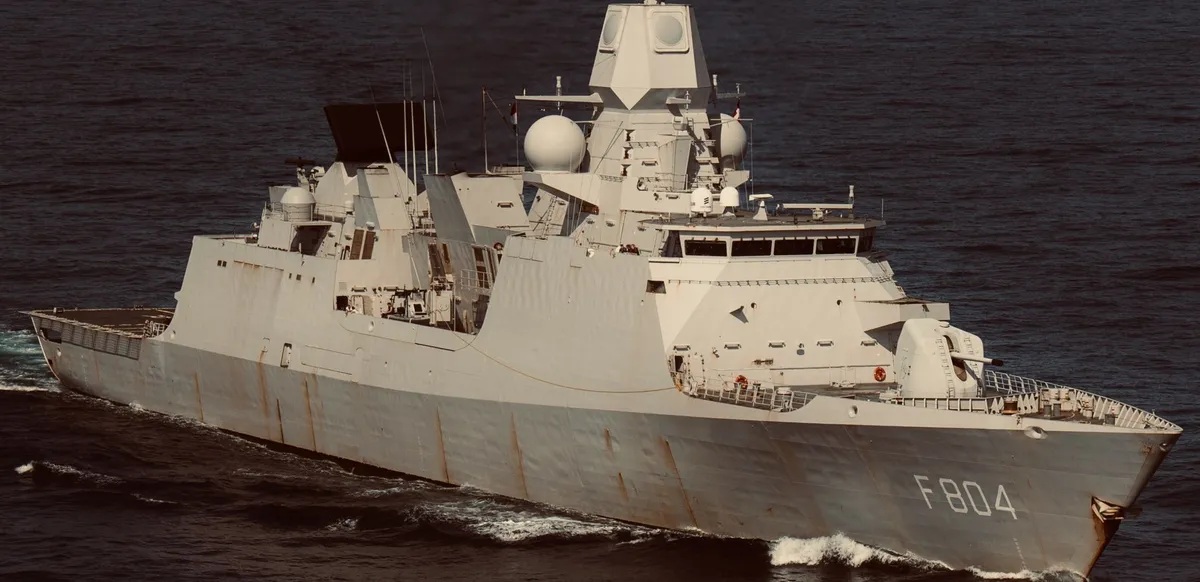
Electronic warfare creates deniability that kinetic force does not.
A missile shot is an act of war; jamming is ambiguous — China's narrative is 'we warned them, they didn't listen, we defended our airspace with non-lethal means.' If this tactic succeeds against a NATO frigate without escalation, it becomes the template for routine harassment of US Navy operations in the Taiwan Strait and around the First Island Chain.
The Dutch have no good response: they cannot jam back without risking NATO-wide escalation, and they cannot fight without triggering Article 5 questions. This is how salami-slicing works in the electromagnetic domain.
This is the first reported use of electronic warfare as a primary interdiction tool against a NATO ally operating in the South China Sea — and it works.
The Netherlands cannot retaliate against jamming without escalating to kinetic action, which creates asymmetry: China can harass, the Dutch can only withdraw or fight. For NATO navies operating under freedom-of-navigation rules, this establishes a new cost baseline.
The PLA is testing whether electronic warfare can substitute for kinetic force and still achieve expulsion — if so, expect replication against US Navy vessels. Watch whether INDOPACOM adjusts rules of engagement or deploys electronic countermeasures as standing equipment on South China Sea transits.
Did the De Ruyter's systems log specific frequencies or modulation patterns? Can NATO navies identify the PLA platform that conducted the jamming? If the Chinese source is accurate about airspace intrusion, was this deliberate probing of Dutch response thresholds?
Fault Lines
Strategic intelligence, synthesized daily — with a public track record. Every call graded against what actually happened.