GA-ASI Adds Standoff Weapons to MQ-9B, Extending Strike Range Over Pacific
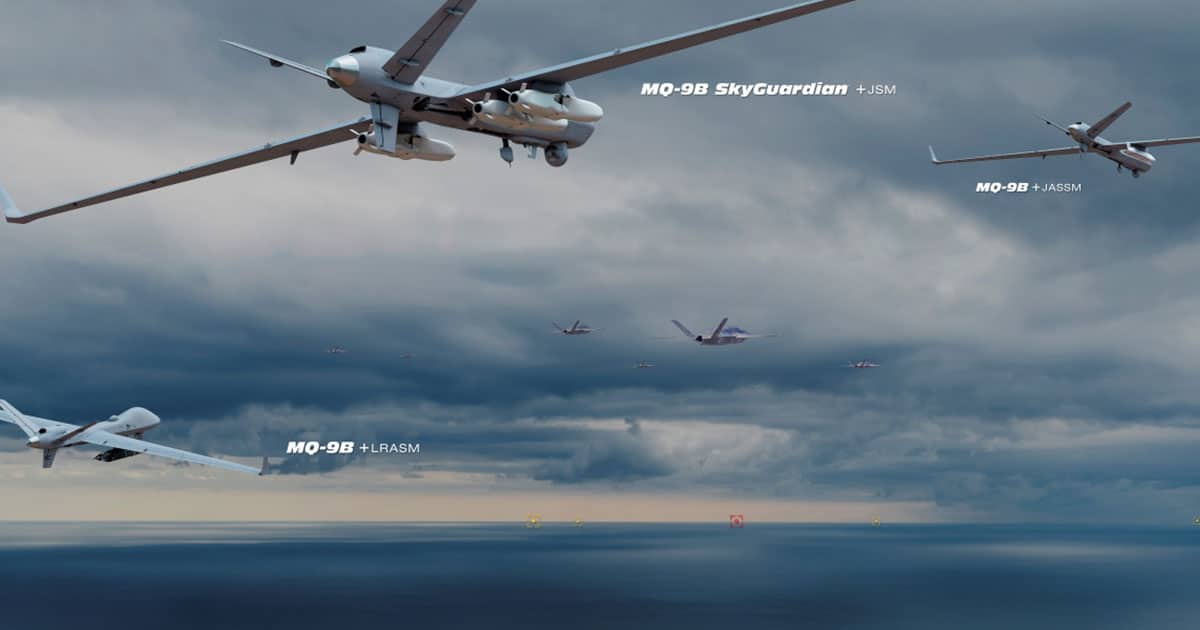
The addition of long-range standoff weapons to MQ-9B variants operated by Japan, Australia, and the U.K. directly increases their effective strike range in contested airspace without requiring forward basing or manned aircraft, reducing the logistical footprint required to hold targets at risk in the Western Pacific.
This reshapes allied air defense architecture planning — shorter-range air defense systems (SHORAD) become less sufficient, forcing Japan and Australia to accelerate procurement of longer-range air defense (Patriot, THAAD) or accept gaps in coverage.
Concurrently, if China's operational planning assumes MQ-9B as a sensor-only platform, this capability upgrade forces a reassessment of force protection requirements for PLA assets in the first island chain.
This expands the operational envelope of a platform already in production and allied service (U.K., Australia, Japan, Germany operate variants), shifting the MQ-9B from a sensor-to-shooter platform operating within 100+ nm standoff range to a true stand-in weapon system.
For program managers: this likely triggers airworthiness and integration certification cycles that delay fielding by 18-36 months and create a product differentiation window for competitors (Northrop's MQ-4C Triton, Turkish Bayraktar TB3).
For investors: GA-ASI's parent (General Atomics) gains a higher-margin upgrade revenue stream from existing operators, but the development cost and certification risk are not disclosed.
The Western Pacific demand signal is explicit — this is not a capability looking for a buyer, but a direct response to Pacific Command requirements, which suggests the capability is already in the requirements stack for allied procurement.
The article does not specify which standoff weapons GA-ASI is integrating (JDAM, SDB, AGM-158, proprietary munition), the expected integration completion date, whether integration requires airframe modifications, or whether allied operators have formally requested this capability.
Fault Lines
Strategic intelligence, synthesized daily — with a public track record. Every call graded against what actually happened.