British Typhoons Scrambled at NATO-Ukraine Border; Engagement Authorization Marks Escalation in Airspace Enforcement
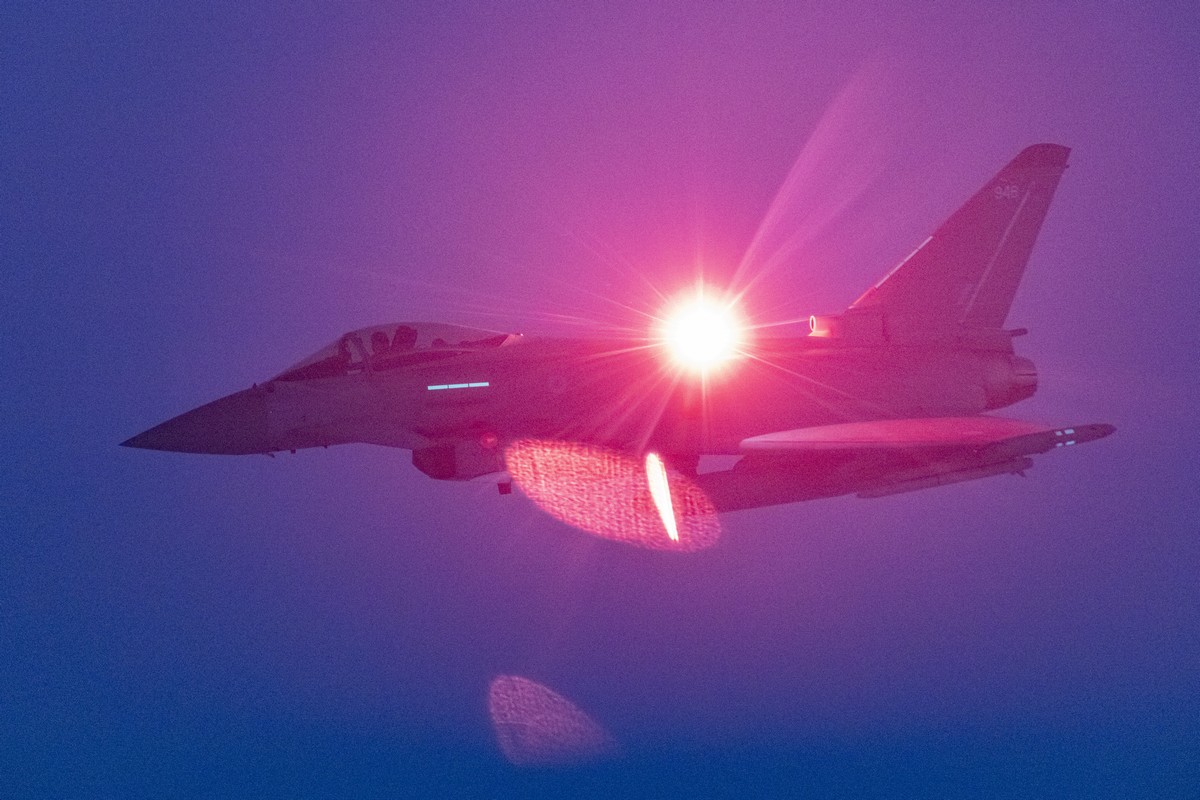
The scramble occurs 24 hours after Hegseth authorized lethal force against Iranian mine-laying vessels in the Hormuz — establishing a pattern of explicit engagement orders against state-linked assets in contested zones.
If RAF Typhoons are now operating under similar authority, NATO air defense posture has crossed from reactive to proactive, which accelerates the timeline for either Russian de-escalation or direct air engagement.
This also validates the EU's Article 42(7) activation: mutual defense is operationalizing before a formal Article 5 trigger, suggesting European command structures are moving faster than alliance consensus typically allows.
This is the operational manifestation of the EU Article 42(7) activation announced April 24 — NATO air defenses are now actively intercepting Russian assets at the border.
The authorization-without-engagement pattern signals rules of engagement have shifted from passive detection to active interception posture, but the no-fire outcome suggests either ROE still contain firing constraints or the Russian drones were positively identified as non-threatening before engagement. The critical question is whether this becomes routine or remains an outlier.
If routine, air traffic density near the Ukraine-NATO boundary is about to spike, forcing a decision: does NATO establish a de facto no-fly zone, or accept recurring intercepts that risk an accidental shoot-down and Article 5 invocation?
Were the Russian drones conducting reconnaissance of NATO air defenses, or were they straying across the border unintentionally? The distinction determines whether this is probing or accident — and whether Hegseth-style 'shoot and kill' orders are filtering down to RAF Mihail Kogalniceanu.
Fault Lines
Strategic intelligence, synthesized daily — with a public track record. Every call graded against what actually happened.