Navy Names Seven MUSV Prototype Builders; HII, Saronic Lead First Tranche
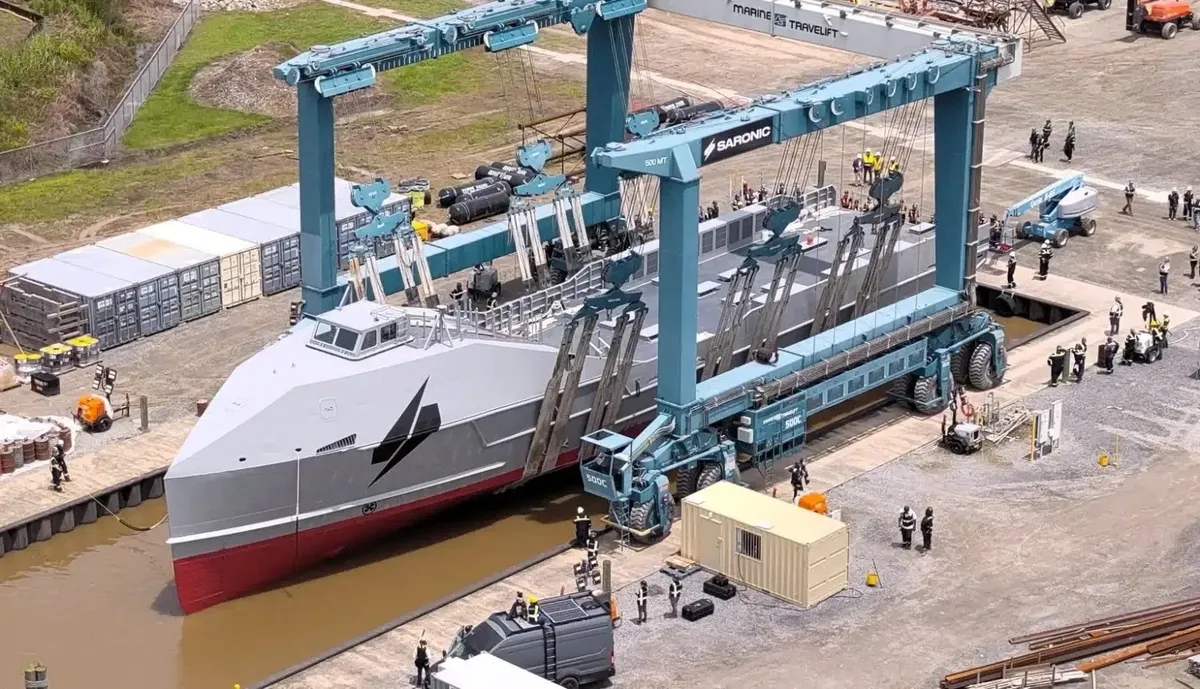
The MUSV prototype phase tests whether the Navy can operate unmanned surface vessels at scale without solving the autonomy software problem first—a reversal of traditional platform development where software integration happens late.
If prototypes reveal that autonomy maturity is the binding constraint (not hull design or propulsion), the Navy will face a choice: extend timelines to mature software, or deploy early variants with degraded autonomy and accept higher operational risk.
This directly affects the timeline for replacing minesweepers and logistics craft in the Indo-Pacific, where contested waters demand either crewed escorts or mature autonomous systems—not prototypes.
The Navy is moving MUSV from concept to hardware, which forces design teams to integrate autonomy software with hull-and-propulsion systems in parallel rather than sequentially—compressing an 18-24 month integration timeline into 12-14 months.
HII and Saronic now face hard constraints on autonomy stack maturity and integration testing before prototype delivery milestones, likely in late 2027 or early 2028. Watch the first design review gate (typically 6-9 months into build) for whether autonomy bottlenecks emerge or whether teams can actually maintain concurrent development.
The article doesn't specify which seven companies comprise the prototype cohort, the dollar value of prototype contracts, or the delivery timeline. Are all seven designs being built in parallel, or is this a down-select phase with further competitions?
Fault Lines
Strategic intelligence, synthesized daily — with a public track record. Every call graded against what actually happened.