US Intel: Large-Scale Iran War Unlikely to Oust Regime Amid Active Strikes
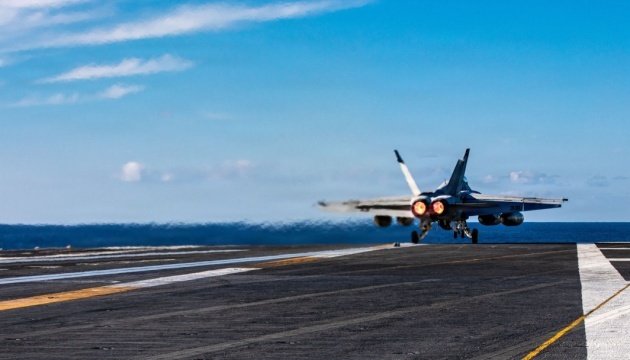
The intelligence assessment that regime change is infeasible even under large-scale attack forces a reframing of the conflict's termination conditions. If the US and Israel cannot achieve political collapse through military means, the conflict resolves only through negotiated settlement, ceasefire, or attrition — each requiring different force posture and timeline planning.
This directly affects Power Projection strategy: sustained operations without a regime-change objective mean allied air forces must plan for multi-month ISR, strike, and air defense rotations rather than a decisive campaign window, driving procurement of consumables (missiles, munitions, spare parts) over new platforms.
This intelligence finding directly constrains the strategic objective of the ongoing campaign.
If regime change is off the table even under maximum military pressure, then current US-Israeli operations are implicitly limited to degradation, deterrence, or forcing negotiation — not toppling Iran's government.
This reshapes how military planners measure success and affects the exit strategy calculus: sustained strikes without regime-change feasibility create risk of indefinite commitment or abrupt withdrawal without political resolution.
For defense contractors, this signals the conflict is likely to persist in a degraded but active state rather than conclude with a decisive outcome, extending demand for air defense systems, ISR, and munitions across allied air forces in the region.
The article does not specify what the NIC assessment identifies as the source of regime resilience — whether it's the IRGC's organizational depth, clerical control of security forces, popular nationalist sentiment, or some combination.
Fault Lines
Strategic intelligence, synthesized daily — with a public track record. Every call graded against what actually happened.