Export-Import Bank Considers Framework for US AI System Sales Abroad
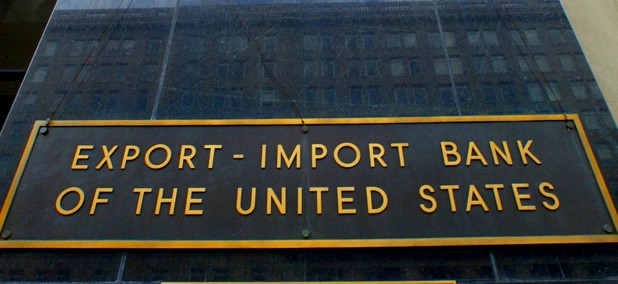
The timing is revealing: SpaceX just filed its S-1 with $18.67B in 2025 revenue, much of it from government contracts. If EXIM now subsidizes AI exports, it creates a new revenue stream for defense-adjacent tech firms — and a new constituency for looser export controls.
Raytheon, Northrop, and RTX have all been hedging their AI bets on commercial upside; EXIM financing removes the international customer acquisition cost and shifts it to the taxpayer. The second-order effect: allied governments that might otherwise build indigenous AI capacity now have cheaper access to US systems, which deepens their reliance on US supply chains and gives Washington veto power over their AI policy.
This signals a deliberate effort to weaponize export financing as a tool for AI market capture — but it also exposes a fundamental tension in Trump administration strategy.
The Commerce Department has spent two years tightening chip export controls to deny China advanced nodes; now EXIM is being asked to subsidize the sale of systems that run on those same chips. If EXIM underwrites AI exports to allied nations, it accelerates their dependency on US technology stacks — but only if Commerce doesn't simultaneously restrict the semiconductor inputs those systems require.
Watch whether the framework explicitly carves out restrictions on AI exports to countries on the Commerce Entity List, or whether EXIM's mandate to promote US exports overrides the building blocks of the chip control regime.
Does the EXIM framework apply only to allied nations (NATO, Japan, South Korea, Australia), or does it include strategic ambiguity on countries like India and Vietnam where US policy is still being negotiated? The article doesn't clarify the geographic or sectoral scope.
Fault Lines
Strategic intelligence, synthesized daily — with a public track record. Every call graded against what actually happened.