Air Force T-7 Red Hawk Faces Airworthiness Risk; Training Jet Program Exposes Deeper Structural Issues
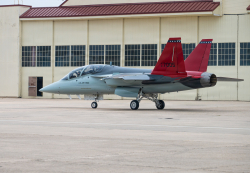
The T-7 delay ripples backward into pilot training capacity. If the Air Force cannot retire the T-6 on schedule, it must sustain two parallel training fleets — a cost problem disguised as a schedule problem.
The T-6 sustainment contract (currently held by Beechcraft) is up for re-compete in FY27; if the Air Force signals the T-6 will stay in service longer, competitors will bid differently and Beechcraft's margin calculations shift.
Separately, the delay exposes a deeper problem: the Air Force certified the T-7 design before flight-testing revealed integration issues that should have surfaced in SIL (system integration lab) or ground testing.
The T-7 is the Air Force's primary advanced trainer replacement — a $9.2B program spanning 351 aircraft across 20+ years of production.
If airworthiness certification slips, the Air Force loses the training pipeline capacity needed to sustain fighter pilot production rates. The constraint is not money; it's the certification authority (FAA and Air Force Test Pilot School) and their timeline to validate the aircraft against military specifications.
A 12-18 month delay pushes initial operating capability (IOC) from 2027 into 2028 or later, which compresses the window to retire the aging T-6 fleet before it reaches service-life limits. Watch the next Air Force acquisition review (scheduled for late 2026) for revised IOC and production lot adjustments.
What specific airworthiness deficiency triggered the 'serious' risk designation — structural, propulsion, avionics, or flight control? And does the Air Force have a formal corrective action plan with FAA milestones, or is this still in the discovery phase?
Fault Lines
Strategic intelligence, synthesized daily — with a public track record. Every call graded against what actually happened.