F-15E Rescue Operation Confirms Iran Air Defense Capability; Resource Intensity Signals Attrition Pressure
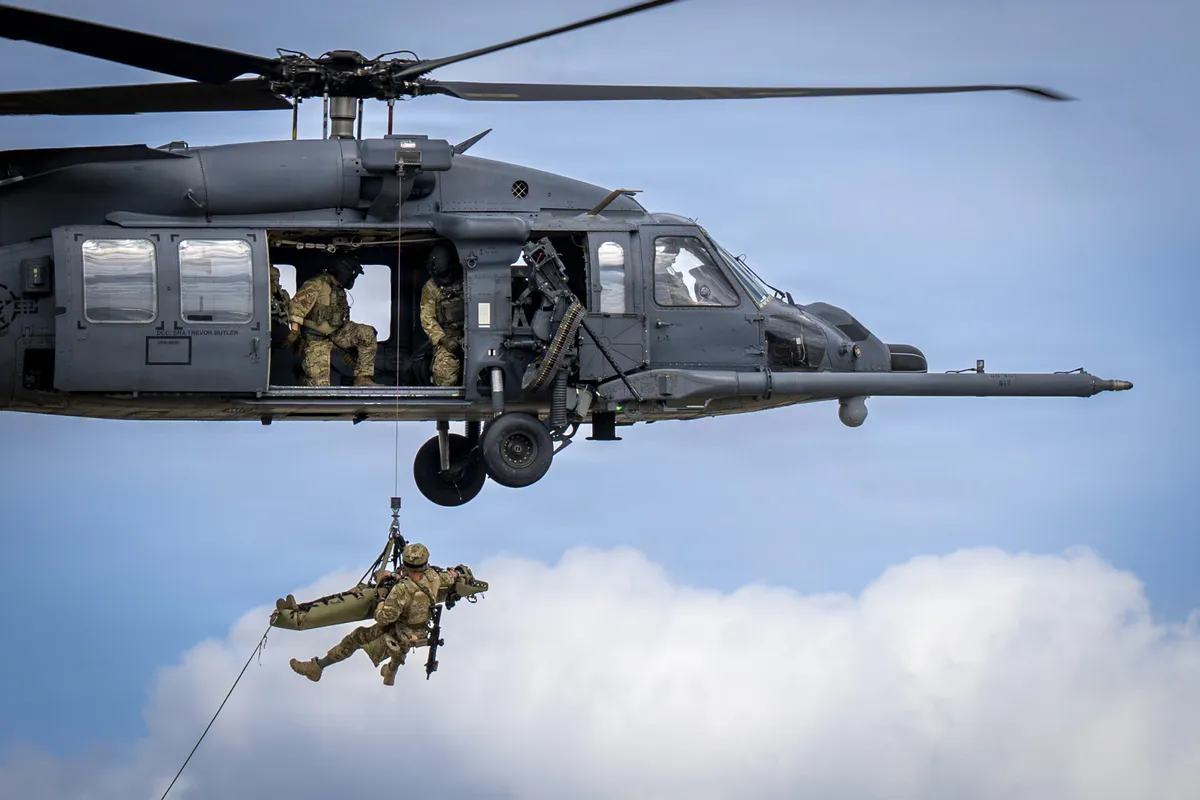
The resource intensity of this single rescue operation directly constrains the feasibility of sustained Operation Epic Fury campaigns.
If each downed aircraft requires hundreds of personnel and dozens of sorties to recover crew, then attrition rates above 1-2% per 100 sorties will exhaust CSAR capacity and force mission termination or acceptance of crew loss — a political and operational ceiling that Iran can exploit by maintaining even modest air defense effectiveness.
This converts Iranian air defense from a tactical problem into a strategic constraint on US campaign duration.
The scale of the rescue operation (hundreds of personnel, dozens of aircraft) confirms that Iranian air defenses are inflicting sufficient losses to require major resource commitment for crew recovery.
This validates the earlier reported downing of the F-15E and at least one A-10, and indicates that sustained operations over Iran now require embedded combat search-and-rescue (CSAR) capability at division-level scale. For program managers: this drives up the operational cost-per-sortie for any extended Iran campaign and may constrain sortie rates if CSAR assets become a binding constraint.
For investors in aerospace and defense: this signals demand for both air defense suppression (EW, decoys, jamming pods) and CSAR platforms (HH-60, CV-22), but also suggests current air superiority claims are overstated relative to actual attrition.
The article does not specify which aircraft types were deployed in the rescue (beyond the downed F-15E), whether any were lost or damaged during extraction, what the total personnel count included (aircrew, ground teams, support), or whether the operation required suppression of Iranian air defenses...
Fault Lines
Strategic intelligence, synthesized daily — with a public track record. Every call graded against what actually happened.