Space Force Plans On-Orbit Refueling & 'Space Tugs' by 2030; Orbital Warfare Doctrine Operationalizes
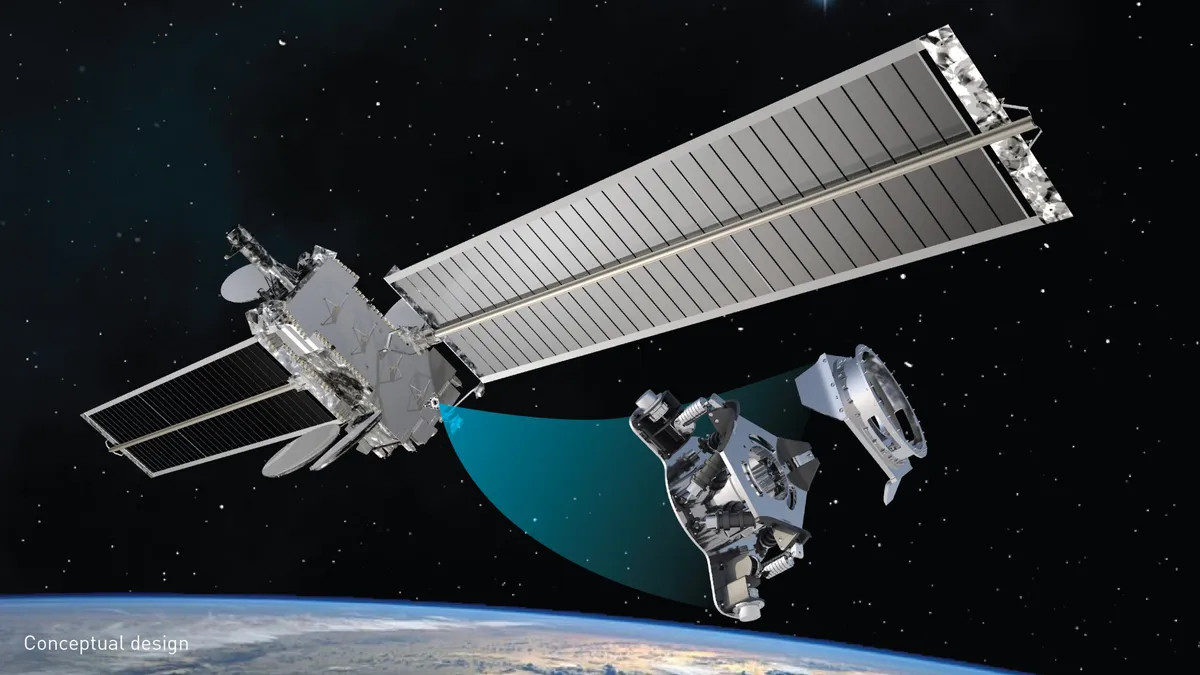
On-orbit refueling directly enables the Space Force to maintain persistent ISR and communications coverage during a China-Taiwan scenario without ground station dependency—reducing vulnerability to the Chinese satellite ground control networks (per April 15 signal on Iran's use of Chinese ISR for Gulf targeting).
If space tugs can reposition satellites mid-conflict, U.S. command can sustain the sensor-to-shooter loop that Pakistan is currently trying to interrupt through backchannel Iran mediation (April 15 signal). This creates a technical hedge against diplomatic collapse: even if the Hormuz blockade negotiations fail and the conflict expands, orbital mobility buys time for reconstitution.
This signals Space Force intent to move beyond passive satellite operations toward active orbital maneuvering and asset repositioning during conflict.
On-orbit refueling extends satellite dwell time and enables rapid constellation reconfiguration—critical if adversaries (China, Russia) attempt to degrade U.S. space architecture during a Taiwan or Indo-Pacific contingency.
The 2025-2030 window overlaps with the Air Force's own space radar acceleration (per April 16 signal on E-3 replacement priorities), suggesting orbital mobility is becoming a binding constraint in U.S. space deterrence posture.
However, the article provides no detail on funding, contractor selection, or integration with existing ASAT defense or debris mitigation policy—all of which will determine whether this remains a roadmap or becomes operational capability.
Does this capability assume a permissive orbital environment (no active ASAT threat), or is it designed for contested scenarios? What is the debris risk from multiple on-orbit refueling operations? Which contractors are competing for 'space tug' development, and what is the estimated unit cost?
Fault Lines
Strategic intelligence, synthesized daily — with a public track record. Every call graded against what actually happened.