Space Force Awards Space-Based Interceptor Contracts as Program Lead Flags Affordability Crisis
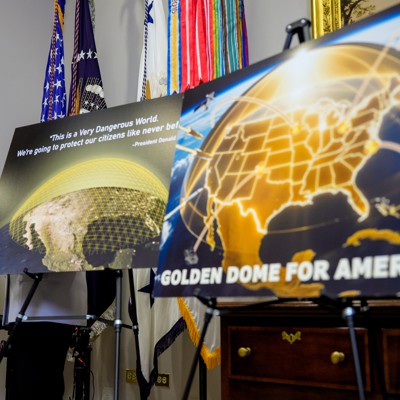
Golden Dome's cost spiral directly competes with NGAD, Next-Gen ICBMs, and hypersonic defense programs for the same budget wedge in FY27-FY31. If affordability kills Golden Dome, those dollars shift to ground-based systems (Patriot PAC-4, THAAD upgrades), which weakens the Air Force's argument for space dominance and extends the service's dependence on legacy air defense.
Conversely, if Congress forces a choice between Golden Dome and a terrestrial alternative, the winner depends on whether the 2028 Taiwan contingency plan requires space-based sensors — if it does, Golden Dome survives even if unaffordable, because the alternative is worse.
Golden Dome is a bet that space-based kill vehicles can defeat hypersonic and maneuvering warheads faster than ground-based systems.
But if the czar is already flagging affordability, the program faces the classic death spiral: full development costs $50B+, Congress won't fund it, contractors optimize for LRIP only, and the capability never reaches the force. Watch whether the contracts are structured as technology demonstrators (which survive budget cuts) or production-ready systems (which don't).
If these are demos, Golden Dome becomes a 10-year research program masquerading as a procurement — useful for keeping contractors employed, worthless for actual air defense.
What is the actual unit cost estimate the Space Force is using internally, and does it assume on-orbit servicing or single-use interceptors? The affordability admission suggests the first number is much higher than public guidance.
Fault Lines
Strategic intelligence, synthesized daily — with a public track record. Every call graded against what actually happened.