UK Deploys Fast Jets to Middle East Defensive Operations After Iran Strikes
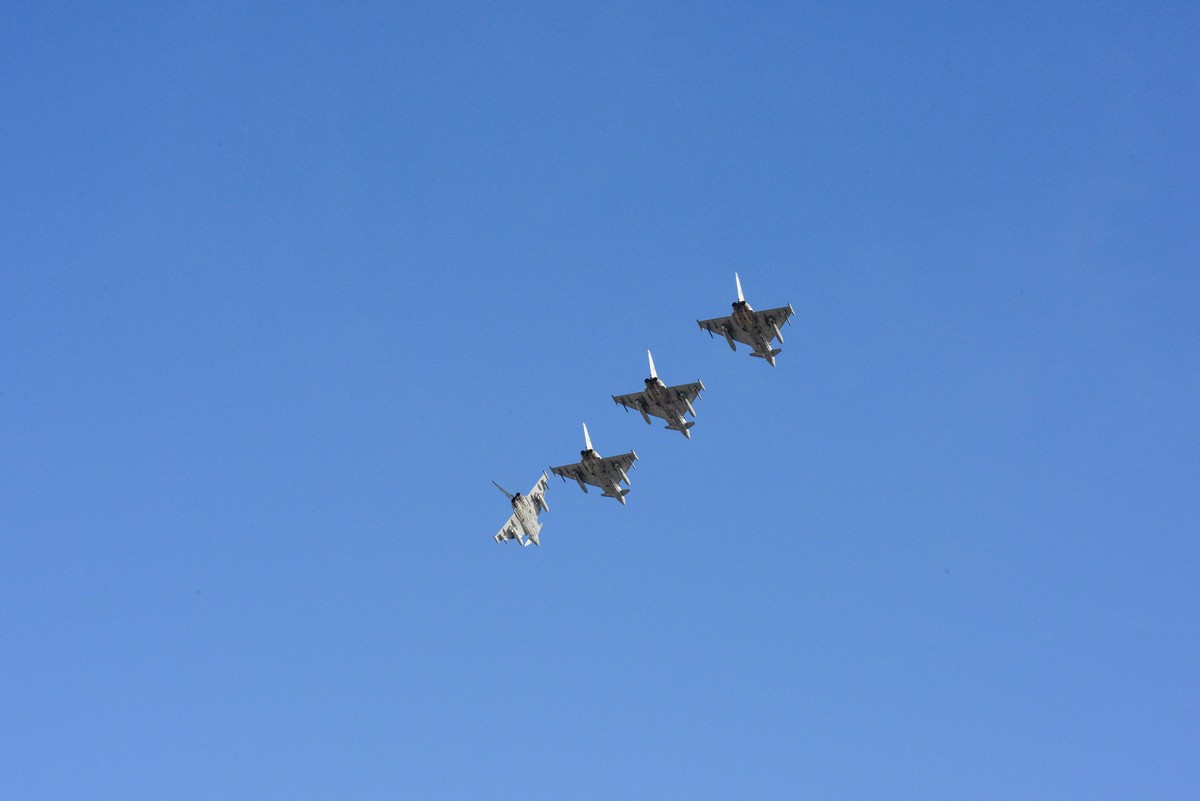
UK fast-jet deployment directly increases demand for engine overhaul and avionics support contracts (Rolls-Royce, Leonardo, BAE Systems) if this extends beyond 30 days; sustained operations in high-tempo air defense consume munitions at rates that can strain UK stockpiles, forcing near-term procurement decisions on Typhoon ordnance.
If the deployment signals a shift toward permanent forward presence rather than surge response, it will reshape UK defense industrial planning for Middle East logistics and regional basing agreements.
This confirms UK participation in an active regional air defense posture tied to US-Israel escalation against Iran.
For defense investors, this signals sustained demand for UK fast-jet sustainment and munitions (Typhoon spares, ASRAAM, Paveway IV) over the near term. The operational commitment also indicates UK readiness to support allied air operations without a formal regional basing announcement — relevant for contractors supporting Akrotiri or Gulf-based logistics.
However, the source provides no detail on scale, duration, or whether this represents a permanent deployment shift versus temporary surge operations, making it impossible to assess whether this signals a structural increase in Middle East air operations or a contained response.
How many aircraft are deployed, from which bases, and for what duration? Are these replacement rotations or an addition to existing Middle East presence? What is the stated mission scope — air defense only, or does it include escort or strike support for allied operations?
Fault Lines
Strategic intelligence, synthesized daily — with a public track record. Every call graded against what actually happened.