Air Force Expands AARGM-ER Vendor Base; Northrop Grumman Sole-Source Eroded Mid-Conflict
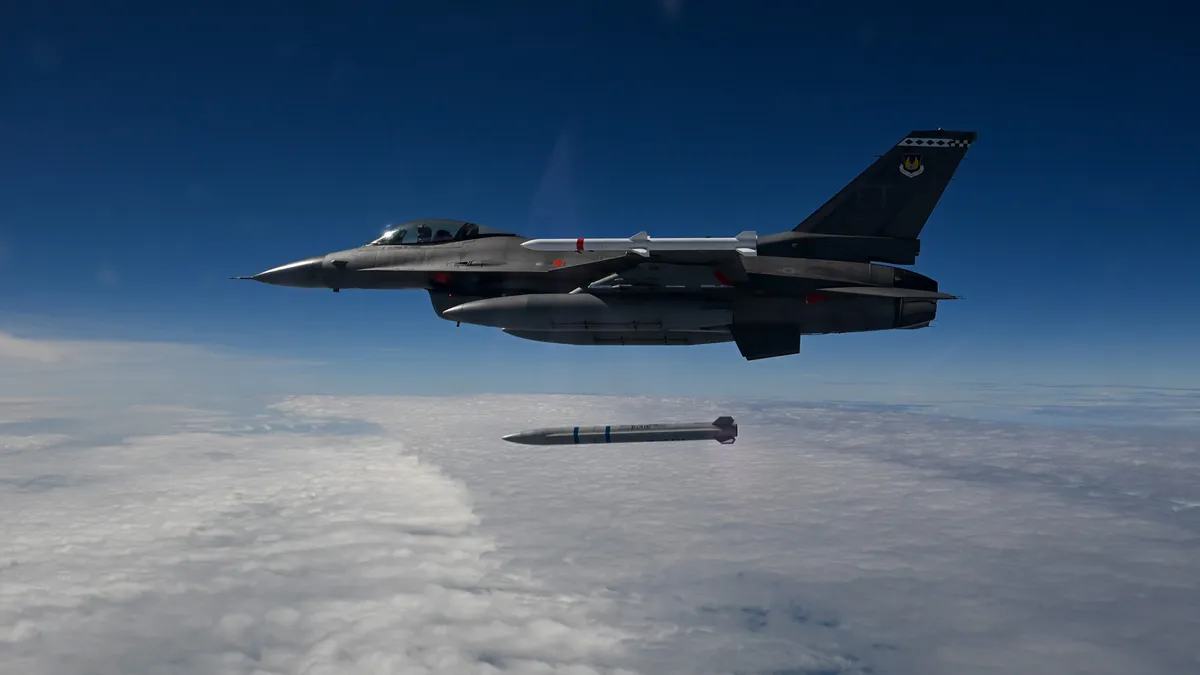
Real-time Iranian air defense suppression demand validates the AARGM-ER requirement and creates urgency for production scale-up.
If Northrop cannot meet wartime surge demand, competitors entering via this survey will capture Block II and sustainment contracts worth an estimated $3-5B over the next decade — directly reducing Northrop's long-term margin on this platform and forcing RTX or other entrants to build production lines that persist into peacetime, fragmenting the industrial base for radar-killing missiles.
This signals a deliberate erosion of Northrop's monopoly on a critical air defense suppression platform at a moment when AARGM-ER demand is demonstrably real — US and Israeli forces are actively operating against Iranian radar and air defense systems.
The market survey suggests either (1) Air Force concern about Northrop's production capacity to meet wartime demand, or (2) deliberate competitive pressure to accelerate delivery or reduce unit cost. If capacity is the driver, competitors entering now will not affect current operations but will reshape post-conflict procurement.
If the Air Force is seeking cost reduction or schedule acceleration, successful competitors could capture Block II production, shifting $2-4B in future contracts away from Northrop. Watch whether competing bids cite delivery timelines or unit pricing as their differentiator.
The article does not specify whether the Air Force is seeking alternatives due to production capacity constraints, schedule risk, cost concerns, or policy preference for competition.
Fault Lines
Strategic intelligence, synthesized daily — with a public track record. Every call graded against what actually happened.