SASC Chair Flags Nuclear & Space Gaps in Defense Strategy as Russia Deploys Orbital Weapons
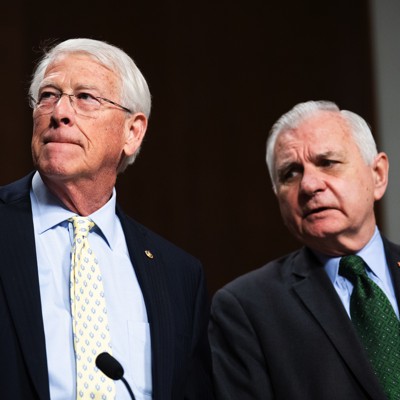
Congressional pressure to reweight the Defense Strategy toward nuclear and space will force DoD to either reprogram existing Middle East procurement authority or request supplemental FY26 funding, both of which delay Iran-theater sustainment contracts.
Northrop Grumman (GBSD lead), Lockheed Martin (Trident II D5 modernization), and Raytheon (space-based early warning) will benefit from budget reallocation, but only if Congress acts before the April 6 Trump deadline on Iranian power plants — after which either a ceasefire or escalation could reset budget priorities entirely.
The SASC's public criticism of the Defense Strategy signals Congressional skepticism about threat prioritization at a moment when the Pentagon is already surging 50,000+ troops to the Middle East and accelerating PrSM production to wartime tempo.
If the Committee uses this gap assessment to redirect FY27 budget authority toward nuclear modernization or space defense (likely through the ICBM recapitalization or Space Force procurement lines), it will compete directly with Iran-theater sustainment and could delay near-term Middle East force rotations.
The timing also exposes a structural problem: the current strategy was written before the Iran escalation and before Russian space weapon deployment became operationally visible, suggesting the next strategy revision will require simultaneous hedging across two theaters and two domains — a constraint that will force trade-offs in industrial base capacity and acquisition timelines.
The article does not specify which Russian space weapon system the STRATCOM commander identified as 'very significant' or provide evidence of when/how it was detected, making it unclear whether this is an existing capability now acknowledged or a newly deployed system that triggered the reassessment...
Fault Lines
Strategic intelligence, synthesized daily — with a public track record. Every call graded against what actually happened.