South Korea Grounds 47 of 57 LAH Helicopters Over Engine Defects; Readiness Impact Immediate
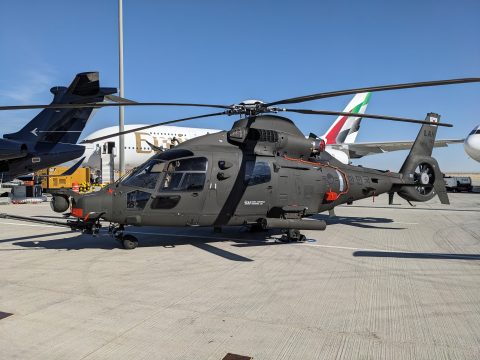
This is a procurement execution failure, not a geopolitical signal—but it has teeth because it occurs in a high-threat environment where rotary-wing assets are operationally irreplaceable. If KAI cannot meet quality gates on a platform it has been developing for over a decade, Seoul's confidence in domestic aerospace manufacturing erodes at the exact moment it is trying to reduce reliance on US platforms.
The LAH was meant to free Seoul from Apache dependency; instead, the grounding forces Seoul back into Apache sustainment negotiations at a moment when US helicopter availability is itself constrained by Middle East commitments. This strengthens Lockheed Martin's leverage in the next Apache contract cycle.
The grounding exposes a critical gap in South Korea's rotary-wing modernization precisely as North Korean drone and missile activity has accelerated across the DMZ.
KAI's inability to deliver a defect-free platform forces Seoul to extend the operational life of legacy airframes—Hueys and MD500s—that lack the sensor fusion and firepower the LAH was supposed to provide.
The timeline is acute: if the defect remediation takes 12+ months (typical for engine redesign and fleet retrofit), South Korea operates through 2027 with degraded air support during a period when DPRK is fielding loitering munitions and expanding its unmanned arsenal. Watch whether Seoul requests emergency US Army Aviation rotorcraft deployments to backfill the gap.
What is the specific engine defect—manufacturing flaw, design issue, or supply-chain contamination? How many flight hours did the 47 affected airframes accumulate before grounding, and does KAI have a root-cause analysis timeline?
Fault Lines
Strategic intelligence, synthesized daily — with a public track record. Every call graded against what actually happened.