Second B-21 Raider Enters Flight Test; Palmdale Production Cadence Accelerates
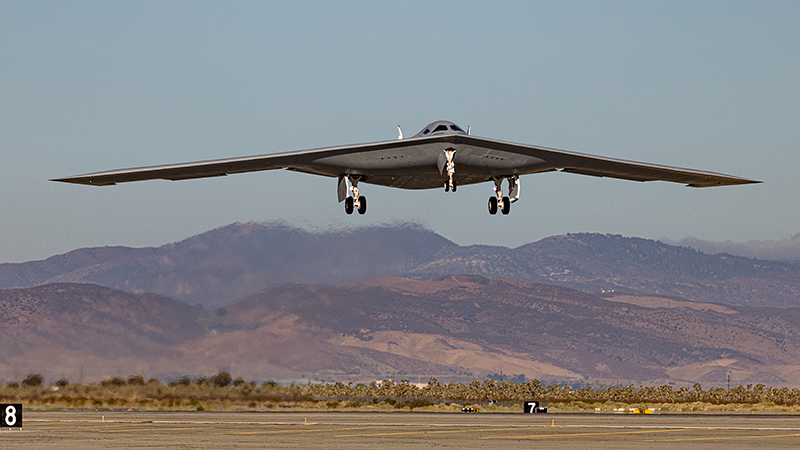
The pace of second-airframe entry matters less than what happens next. If Northrop sustains a 6-month spacing between flight-test airframes (first entered flight test in 2023, second now in 2025), the service reaches four test articles by 2027 — enough to begin production readiness reviews. But if spacing slips to 9-12 months, the test program compresses into 2028-2029, leaving zero buffer for Block 1 redesign work.
The production line at Palmdale has only one competitor for strategic bomber capacity: the B-52H sustainment depot at Tinker Air Force Base. Every month the B-21 test delays is a month the Air Force must extend B-52H service life at rising maintenance cost. That economic pressure will force acceleration whether the airframe is ready or not.
The second airframe entering test compresses the validation window before production commitment decisions.
Air Force Global Strike Command must certify performance against a compressed schedule — the service has publicly committed to initial operational capability by 2032, which means Palmdale's production ramp (currently estimated at 4-6 units annually) cannot slip without cascading delays into the FYDP.
This is the first hard constraint: if Block 1 testing surfaces structural or avionics defects requiring redesign, the 2032 IOC target becomes unachievable. Watch the Air Force's FY27 budget justification for any language around schedule risk or production rate adjustments — that's where the service signals confidence or hedging.
What is the actual monthly production rate Northrop has achieved at Palmdale, and does it match the 4-6 unit annual target the Air Force has cited? The article doesn't specify whether this second airframe is the second airframe built or the second airframe in the test queue.
Fault Lines
Strategic intelligence, synthesized daily — with a public track record. Every call graded against what actually happened.