Navy Minehunter Shortage Exposes Iran Strait-Closure Vulnerability Mid-Campaign
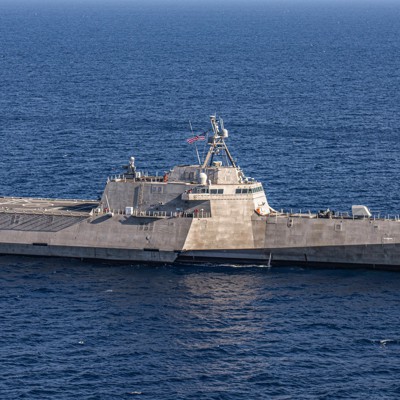
Mine-warfare readiness gaps directly compress the operational window for Trump's Hormuz deadline (April 8).
If Iran has already begun laying mines or can do so faster than the U.S. can clear them, the U.S. cannot credibly enforce the reopening demand without either accepting Hormuz closure or conducting preemptive strikes on Iranian mine-laying platforms — escalating the campaign beyond the infrastructure strikes already underway.
This transforms a procurement/readiness issue into a deterrence credibility problem: the deadline becomes unenforceable if the Navy cannot physically clear the waterway.
Trump's April 8 Hormuz reopening deadline and current Israeli-Iranian strikes create an immediate operational problem: if Iran mines the Strait of Hormuz or approaches to Saudi ports (already struck on April 7), the U.S. lacks forward-deployed, operationally ready minehunters to clear them.
Avengers in Japan face 2-4 week transit times; LCS platforms are unreliable for this mission per testing. This forces either: (1) accepting temporary Hormuz closure and accepting the economic/political cost of missing Trump's deadline, (2) attempting clearance with degraded capability and accepting attrition risk, or (3) escalating to strike Iranian mine-laying assets preemptively.
The gap directly constrains the military options available to enforce the reopening demand and exposes a structural readiness failure in mine warfare that predates this crisis.
The article does not specify which LCS variants have been tested, what the documented performance failures are, or the timeline to either fix LCS mine-countermeasures capability or relocate Avengers forward.
Fault Lines
Strategic intelligence, synthesized daily — with a public track record. Every call graded against what actually happened.