Australia Opens A$200M P-8A Deep Maintenance Facility; Expands Regional Poseidon Support
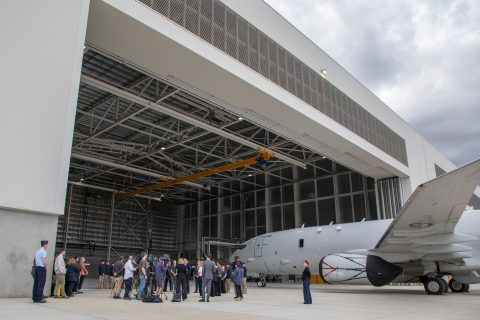
If the US, Japan, and India commit their P-8A fleets to Edinburgh-based maintenance cycles, Australia gains a leverage point over allied force readiness — any disruption to the facility (industrial action, damage, political tension) cascades across the entire regional posture.
This also creates an incentive for Australia to expand the facility's scope into modification work (weapons integration, sensor upgrades, avionics), which would deepen allied dependence and lock in Australian industrial participation in P-8A evolution.
The investment suggests Canberra expects sustained high-utilization rates — meaning either planned high-tempo operations or a belief that allied P-8A fleets will expand beyond current numbers.
This locks in Australia as the regional logistics hub for P-8A sustainment across AUKUS and Quad partners — a role that consolidates supply-chain authority and creates a single point of failure for maritime patrol availability across the Indo-Pacific.
The A$200 million commitment signals Canberra is betting on sustained high-tempo operations (anti-submarine warfare, anti-ship, ISR) and expects allied aircraft to cycle through Edinburgh for deep maintenance on a regular schedule.
Watch whether the US and Japan formally commit their P-8A fleets to Edinburgh-based maintenance contracts — that would telegraph expectations of sustained China-contingency operations and lock allied logistics into Australian territory for the next decade.
Does the facility have the capacity to support simultaneous deep maintenance on multiple allied P-8As, or is Australia planning to stagger rotations? What is the actual throughput timeline — how many aircraft per year can the DMMF handle, and does that match allied deployment tempos?
Fault Lines
Strategic intelligence, synthesized daily — with a public track record. Every call graded against what actually happened.