Takaichi supermajority accelerates Japan defense spending and economic security policy
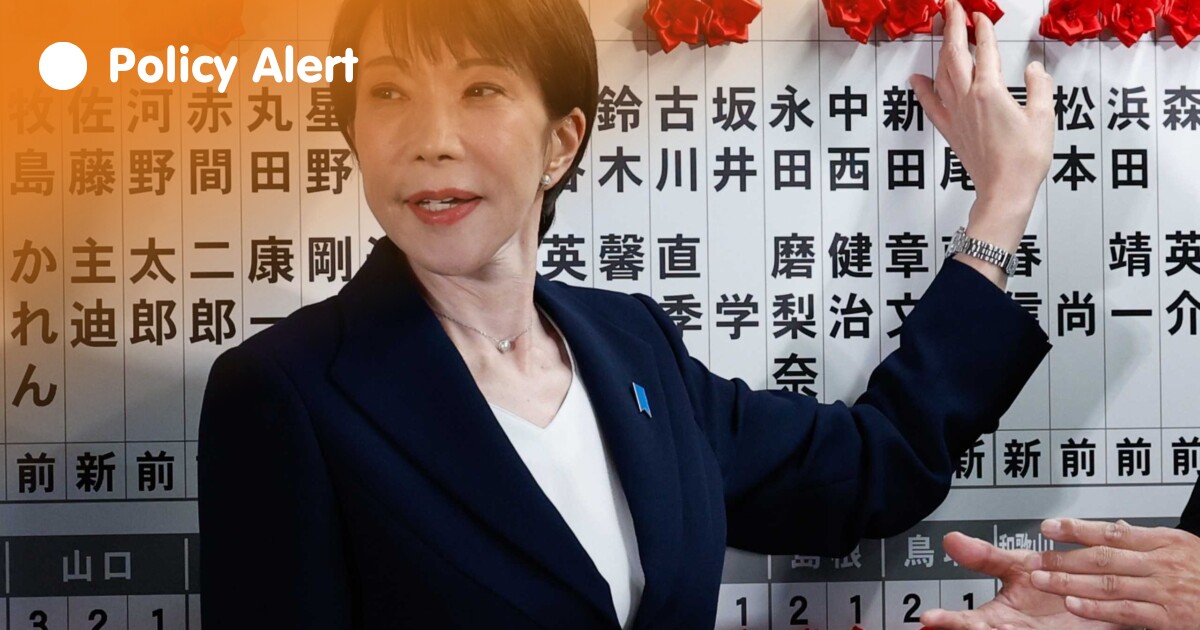
This connects two pillars: (1) Market Forces—faster Japanese defense spending and export control tightening will accelerate allied supply chain reallocation away from China, affecting semiconductor and critical mineral sourcing strategies for defense primes. (2) Geopolitical Friction—a supermajority removes internal political veto points, making Japan's China policy more assertive and forcing allied nations to either match that pace or risk strategic misalignment.
The mechanism is political: electoral mandate → policy acceleration → allied coordination pressure. This is not a new direction but a velocity change that creates scheduling risk for programs betting on gradual allied consensus.
A Takaichi supermajority removes domestic political friction on defense budgets and security export controls—Japan has historically constrained military spending and technology transfers.
This matters for allied procurement timelines: if Japan moves faster on defense industrial policy and dual-use export restrictions, it affects supply chains for semiconductors, rare earths, and advanced manufacturing in ways that ripple through allied acquisition programs.
The tension is real: allies gain a more aligned partner but must match Japan's pace on China containment, which may force earlier commitment to supply chain diversification away from China. The ECFR framing—'more predictable but also adds pressure'—is the key: this is not a shift in direction but an acceleration that exposes laggards.
The article does not specify which defense programs, export controls, or economic security policies Takaichi intends to prioritize, nor does it quantify the expected increase in defense spending or timeline for implementation.
Fault Lines
Strategic intelligence, synthesized daily — with a public track record. Every call graded against what actually happened.