Iran Drone Strikes on Gulf Data Centers Expose Undersea Cable Vulnerability
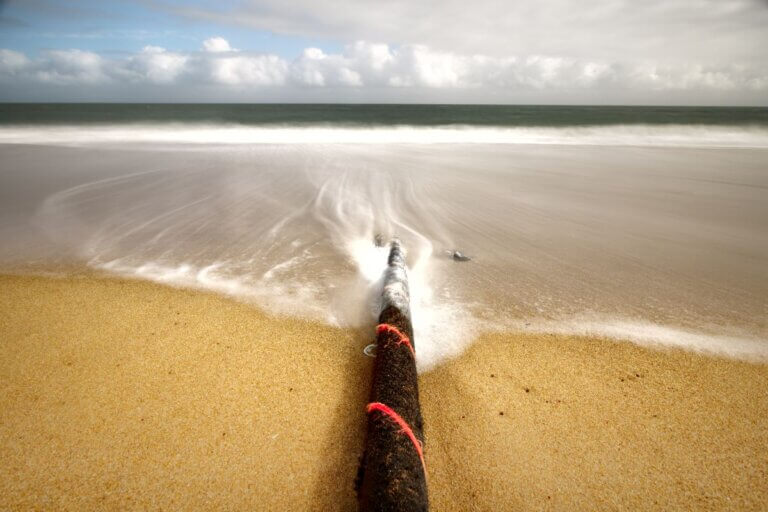
If Iranian strikes on data centers and undersea cables are sustained, they force a shift in US force protection doctrine from air/missile defense to critical infrastructure hardening—a mission for which Central Command lacks dedicated resources and which competes with the ongoing Hormuz blockade response already straining NATO air defense stockpiles (per April 17 signal on delayed NATO deliveries).
This also creates a new target set for Chinese-origin ISR (already operationalized by Iran per April 15 signals), making the China-Iran intelligence integration visible in a new domain and potentially justifying expanded US cyber or strike operations against dual-use infrastructure—raising escalation risk beyond current military operations.
Data centers and undersea cables are dual-use infrastructure with no military protection equivalent to air defense around airbases.
If Iranian strikes on these facilities are confirmed and ongoing, they create a new asymmetric vulnerability: damage to regional hub data centers or cable landing stations could degrade financial settlement systems, intelligence networks, and military communications across the Gulf simultaneously—effects that cannot be mitigated by air superiority alone.
This is distinct from Hormuz blockade threats (already covered in recent signals) and suggests Iran is targeting the information layer of Gulf operations, not just energy chokepoints. Watch for: damage assessments from UAE/Bahrain authorities, insurance claims, and whether US Central Command deploys air defense or hardening resources to protect these sites.
The article does not specify which data centers were struck, when the strikes occurred, what damage resulted, or whether these were confirmed Iranian attacks or assessed attribution.
Fault Lines
Strategic intelligence, synthesized daily — with a public track record. Every call graded against what actually happened.