Air Force Accelerates CCA Operational Testing with F-22 Integration This Summer
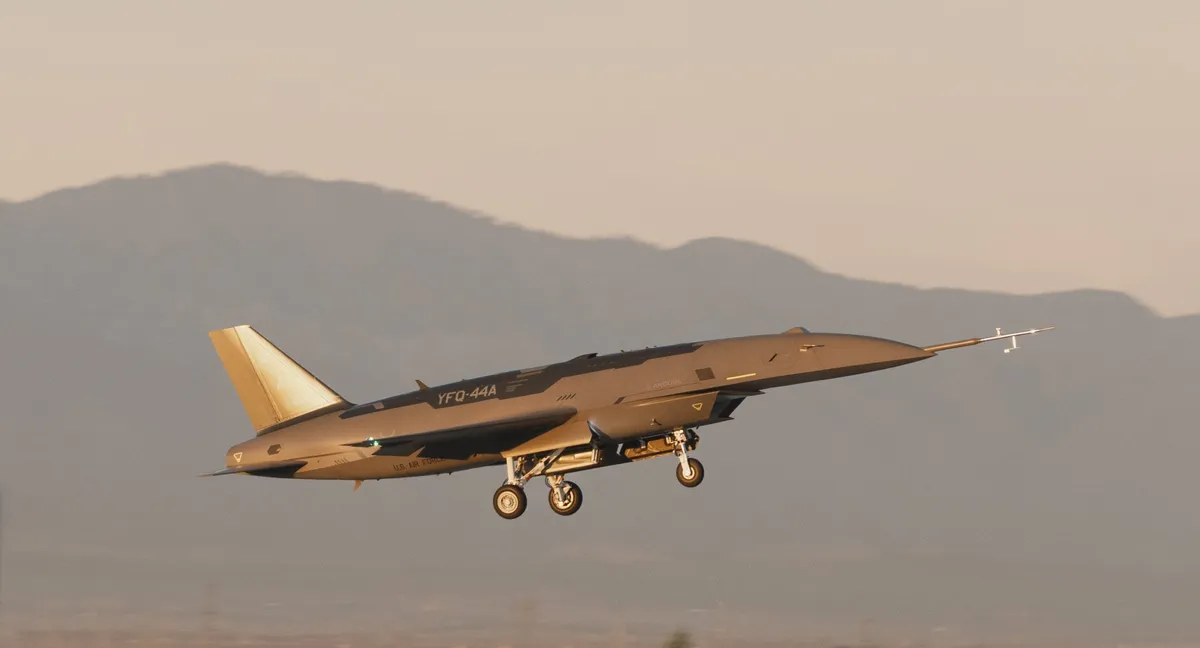
Accelerated CCA testing directly forces Northrop's production planning and supply chain commitments forward. If testing validates autonomous wingman operations, Air Force procurement authority will shift capital from extended F-22 Block 35 sustainment contracts into CCA production lots, compressing the timeline for engine, avionics, and sensor suppliers to deliver qualified hardware.
This also creates a 12-18 month window where allied air forces (Japan, South Korea, Australia) will demand CCA integration roadmaps, triggering export control reviews and potentially unlocking new FMS revenue streams for Northrop and its subcontractors.
This timeline acceleration compresses the validation window for human-machine teaming in contested airspace before full operational deployment.
If summer testing confirms autonomous coordination with legacy fifth-gen platforms, it unlocks procurement momentum for CCA production units — likely triggering vendor selection and initial lot awards in FY27 budget cycles. Northrop Grumman (primary CCA contractor) and supporting primes (General Atomics, Kratos, Boeing) will face compressed integration schedules.
The specific success metric is whether F-22 pilots can reliably hand off targeting and maneuvering authority to semi-autonomous wingmen without latency or loss-of-link failures; failure to demonstrate this by fall 2026 delays the entire concept and extends F-22 sustainment as the primary air-to-air platform.
The article does not specify how many CCA airframes will participate, which Air Force units are designated for testing, what specific failure criteria would halt the program, or whether the summer ops are limited to visual range or extend to beyond-visual-range engagement scenarios — each of which d...
Fault Lines
Strategic intelligence, synthesized daily — with a public track record. Every call graded against what actually happened.