DoD Completes $1B Stake in L3Harris Solid Rocket Motor Unit; Spinoff Reduces Vertical Integration Risk
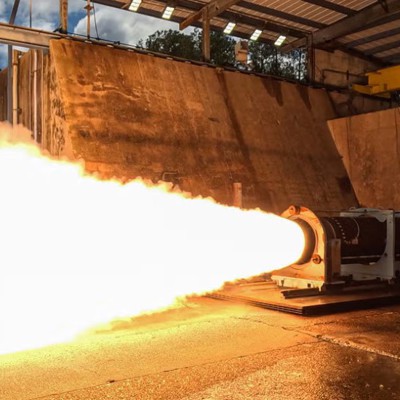
The spinoff creates a standalone SRM supplier with no internal prime to absorb losses during demand troughs — if the next-gen missile program slips (as they do), this company's revenue drops 40-60% with no corporate parent to cross-subsidize it. That forces faster cost-cutting or a merger, both of which compress margins and reduce redundancy in the industrial base.
In the current Middle East escalation cycle, SRM demand is actually rising (Tomahawk replenishment, LRASM production), so this timing buys DoD a 2-3 year window before the next contraction tests whether the spinoff survives independently.
This is a financial de-risking play, not a capability expansion.
DoD is betting that separating the SRM business into an independent public entity will prevent supply chain concentration — if L3Harris faces cash pressure, bankruptcy, or acquisition by a non-aligned buyer, the motor supply line doesn't go dark. The $1B stake signals DoD's willingness to backstop equity capital when it believes a supplier is systemically important.
But it also signals doubt: if L3Harris were reliably solvent and committed to the business, DoD wouldn't need to own 20% of it. Watch whether this becomes a precedent for other primes' critical subcomponents (Raytheon's solid rocket motors, Northrop's missile guidance).
The spinoff also creates a new public company with defense revenue concentration — that makes it a takeover target for foreign buyers or a consolidation play for other primes. DoD has no golden share or board seat mentioned in the reporting, which is a gap.
Does DoD have veto rights over a change-of-control transaction, or is the 20% stake purely passive? A foreign buyer could theoretically acquire the 80% and force DoD out.
Fault Lines
Strategic intelligence, synthesized daily — with a public track record. Every call graded against what actually happened.