U.S. Signals Europe Must Fund Own Defense; Rubio Aligns with Vance on NATO Burden
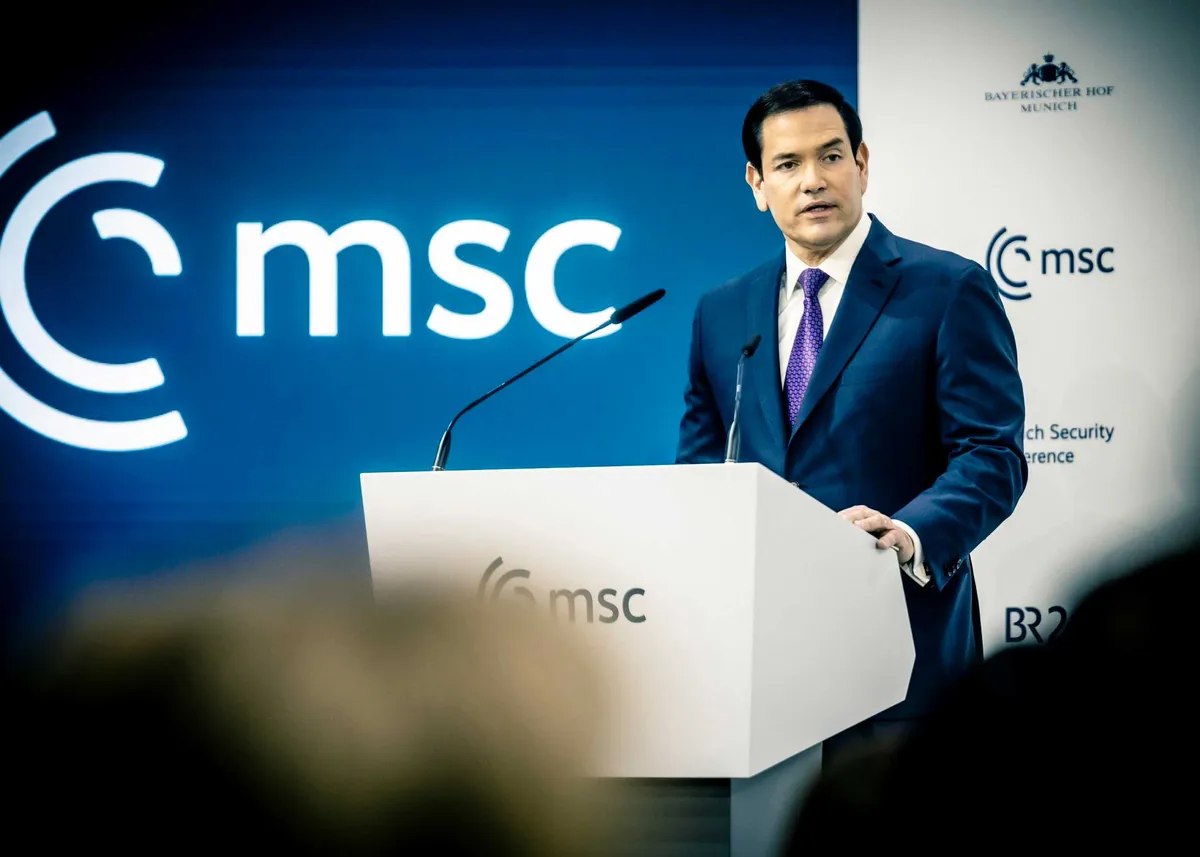
European defense independence accelerates consolidation of non-NATO-standard procurement, forcing U.S. defense primes (Lockheed, RTX, Northrop) to compete for European contracts on indigenous terms rather than through NATO interoperability mandates.
Simultaneously, if the U.S. signals reduced objection to technology transfers to far-right-led governments, export control enforcement becomes a bilateral negotiation rather than a bloc-level standard, creating arbitrage opportunities for European suppliers to license U.S. technology to higher-risk recipients and undermining the ITAR/EAR regime's effectiveness in Europe.
If this reflects sustained U.S. policy rather than rhetorical variation, European defense budgets face pressure to grow independent of NATO commitments or U.S. co-production arrangements.
This forces European OEMs (Airbus, Rheinmetall, Leonardo, Thales) to plan for reduced U.S. technology access and increased reliance on indigenous supply chains or non-U.S. partnerships—a shift that reshapes procurement timelines and industrial consolidation across the continent.
The administration's apparent comfort with far-right European governments also suggests reduced friction on defense technology transfers to Poland, Hungary, or other ethno-nationalist-led states, which could fragment NATO's technology standards and create export control enforcement gaps.
Critical unknown: whether this stance extends to NATO Article 5 commitments in a Russia contingency, or is limited to cost-sharing during peacetime.
The article does not specify whether U.S. security guarantees (Article 5) remain unconditional, nor does it detail which European states or defense programs the administration views as aligned with its preferred model.
Fault Lines
Strategic intelligence, synthesized daily — with a public track record. Every call graded against what actually happened.