Northrop Grumman Partners With Hermeus to Militarize Quarterhorse High-Speed Drone
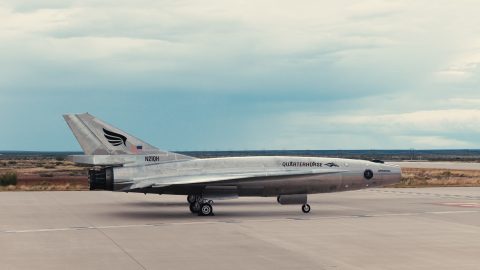
Northrop's YFQ-48A Talon Blue is already in the collaborative combat aircraft competition and was just selected by the UK Royal Navy for a carrier demonstration, so the Hermeus deal extends Northrop's autonomous portfolio into a speed regime — sustained high-Mach — where no CCA competitor currently operates.
If Hermeus reaches Mach 5 on the Mk 4 timeline by 2029, Northrop will have mission systems already integrated and flight-tested, giving it a first-mover advantage in any DoD hypersonic strike-drone requirement that follows.
The company that loses ground here is Lockheed Martin's Skunk Works, which has its own hypersonic programs but no announced partnership with a venture-backed airframe developer at this stage of flight testing.
Northrop Grumman is positioning itself as the mission-systems integrator for a hypersonic drone program that has moved from concept to Mach 1.6 in under a year, with a Mach 5 target by 2029.
The partnership gives Northrop a low-cost entry into high-speed autonomous aviation without carrying Hermeus's development risk, while giving Hermeus a credible path to DoD procurement — the article cites the Department of War's stated demand for autonomous systems fielded in months.
The variant to be militarized has not been named, which leaves open whether Northrop is buying into the current subsonic-to-supersonic envelope or waiting for the Mk 3's turbine-to-ramjet transition in 2028.
Which Quarterhorse variant is covered by the Northrop partnership — the current Mk 2.2 or a later mark — and has any DoD program office issued a formal requirement that Quarterhorse is being built to answer?
Fault Lines
Strategic intelligence, synthesized daily — with a public track record. Every call graded against what actually happened.