Navy Deploys Applied Intuition Data Kit; Ships Begin Real-Time AI Training Pipeline
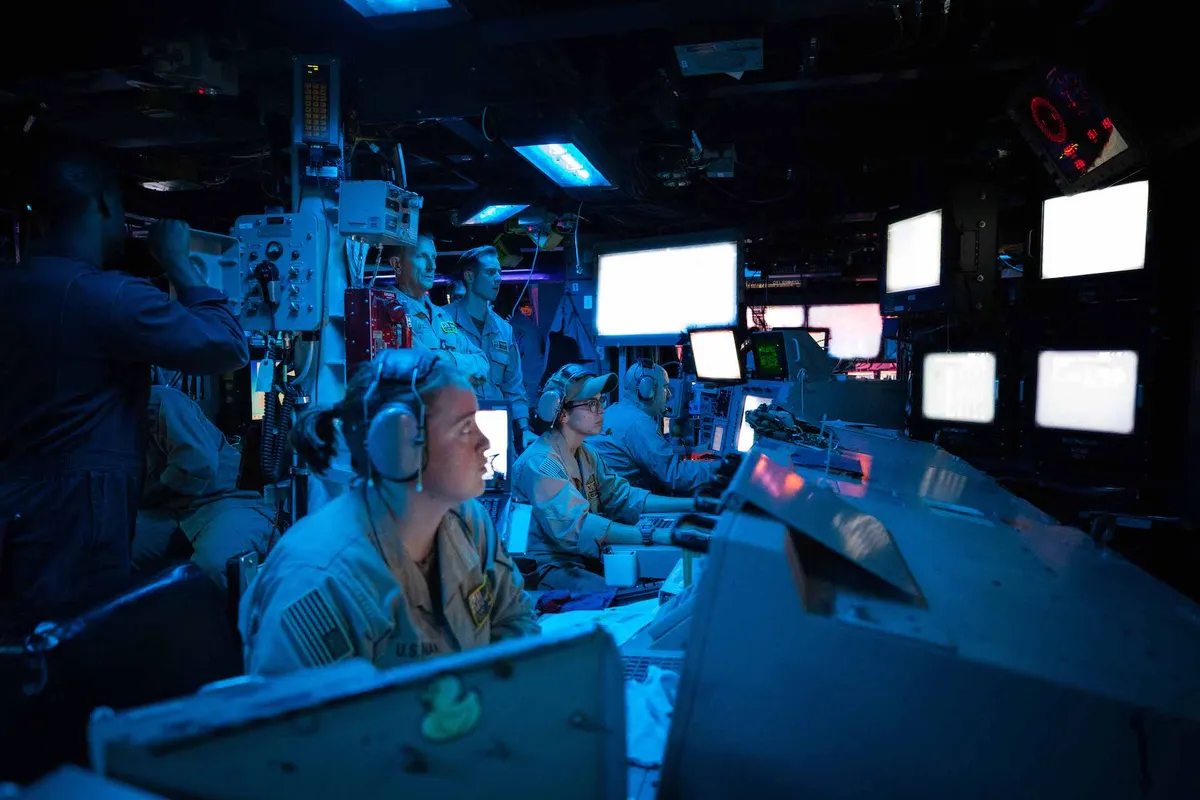
Real-time AI training at sea compresses the development cycle for autonomous naval combat systems, which directly affects the Navy's ability to field multi-domain autonomous swarms against peer adversaries.
If models trained on this live data reach operational status before 2028, the Navy shifts from human-in-the-loop to human-on-the-loop for air defense and anti-ship engagements — a capability advantage in any Taiwan contingency or high-intensity peer conflict where decision speed determines outcomes.
This accelerates the Navy's ability to train AI models on live operational conditions — radar signatures, sonar patterns, environmental noise, engagement geometry — at scale and without latency.
The immediate benefit is faster iteration on autonomous decision-making for surface warfare, anti-submarine warfare, and air defense. The constraint is data quality and labeling at sea; if the Navy cannot validate ground truth in real time, model drift will compound.
Watch whether this deployment triggers similar programs in Army and Air Force, which would signal a shift toward distributed AI training across all domains.
The article does not specify: (1) how many ships received the kit or are planned to receive it; (2) what specific AI/ML models are being trained; (3) data security protocols for continuous collection at sea; (4) timeline for operational deployment of models trained on this data; (5) whether allied n...
Fault Lines
Strategic intelligence, synthesized daily — with a public track record. Every call graded against what actually happened.