Saab Delivers First F-39F Two-Seat Gripen to Brazil; Expands Fighter Production Outside NATO
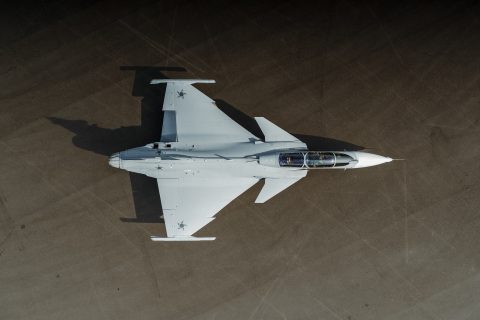
Saab's ability to execute final assembly and delivery outside Sweden suggests the company has distributed its supply chain enough to absorb non-NATO customer demand without disrupting NATO commitments — a constraint that has historically limited European fighter exports.
If Brazil's order exceeds 12 aircraft, Saab faces a hard choice: expand Linkoping capacity (capital-intensive, multi-year) or negotiate licensed co-production in Brazil (technology transfer, margin compression).
The F-39F competes directly with Lockheed's F-16V Block 70 in Latin America; Brazil's selection of Gripen over Block 70 suggests price or industrial participation terms favored Saab, a data point for other regional competitors evaluating their own procurement timelines.
Brazil's acquisition of the F-39F signals Saab's ability to sustain fighter production outside its traditional European customer base at a moment when allied air forces are accelerating modernization cycles — but the signal is incremental without visibility into total order size or delivery timeline.
The article provides no contract value, number of aircraft on order, or production rate, leaving unclear whether this represents a one-off diplomatic gesture or the foundation of a new export revenue stream.
Watch for Brazilian Air Force statements on total Gripen fleet size and delivery schedule; if Brazil intends to acquire 24+ aircraft, this opens a South American market that Lockheed Martin (F-16V) and Boeing (Super Hornet) have not decisively claimed.
How many F-39Fs has Brazil ordered, and what is the planned delivery cadence? Is Saab committing dedicated production capacity in Linkoping, or is this aircraft being pulled from European NATO orders?
Fault Lines
Strategic intelligence, synthesized daily — with a public track record. Every call graded against what actually happened.