France Names Next SSBN Class 'Invincible,' Signals Nuclear Modernization Timeline
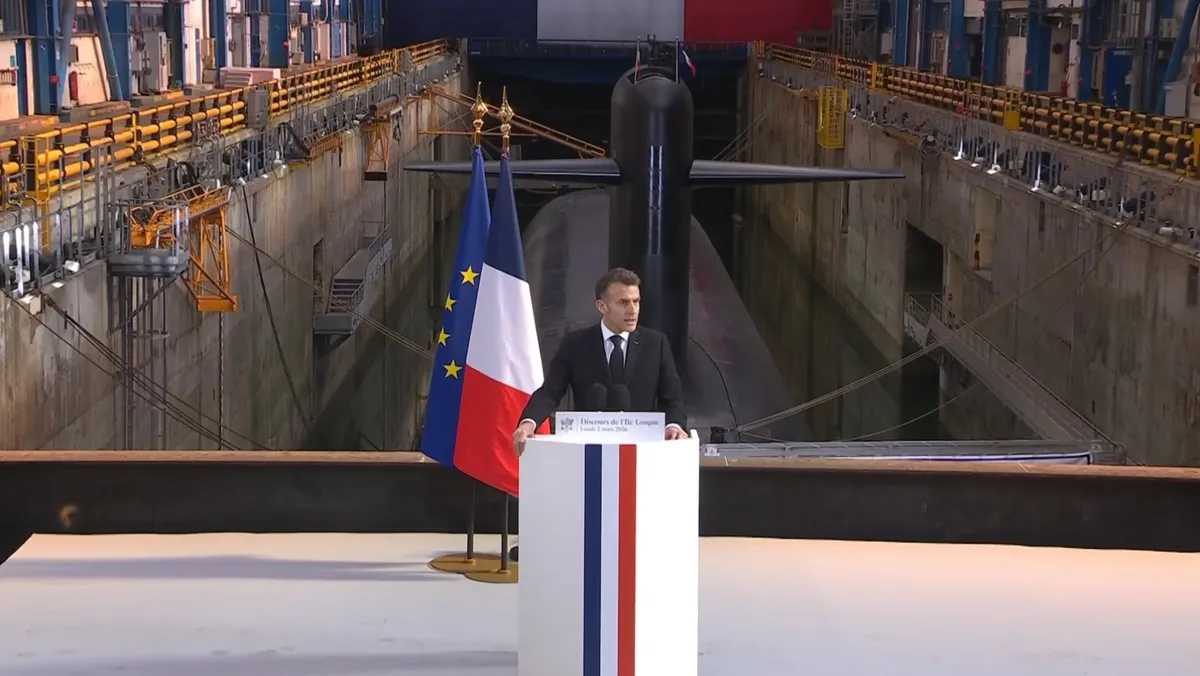
France's independent SSBN modernization directly competes with NATO's integrated nuclear posture and complicates allied burden-sharing negotiations. If the Invincible-class delays (common in submarine programs), France may press NATO partners to extend Triton or other interim deterrence commitments, affecting UK and US submarine procurement schedules and maintenance contracts.
Separately, the naming announcement—timed to a presidential address on deterrence parameters—suggests Macron is using the program to reinforce French strategic autonomy ahead of potential NATO nuclear policy reviews, a political signal that will influence how allied defense budgets allocate between NATO-integrated and national deterrence capabilities.
The formal naming of a next-generation SSBN class signals that France has progressed beyond conceptual design and entered the detailed acquisition phase.
For defense primes competing on French naval modernization (Naval Group, potentially Thales for combat systems), this narrows the window to influence final design choices and locks in procurement timelines.
For allied navies and NATO planning staffs, the Invincible-class represents a credible modernization of France's sea-based deterrent—independent of NATO command and critical to French strategic autonomy in the 2040s.
The real constraint is the source article's omission of any timeline, tonnage, missile type, or budget figure; without those, the announcement is ceremonial rather than actionable for investors or program managers.
The article does not state when the first Invincible-class SSBN will enter service, its estimated cost, which missiles it will carry, or how many units France plans to build—all critical for supply chain planning and competitor analysis.
Fault Lines
Strategic intelligence, synthesized daily — with a public track record. Every call graded against what actually happened.