Szczudlik Argues NATO Should Address China's Concerns Despite Being Wrong Forum for Discussion
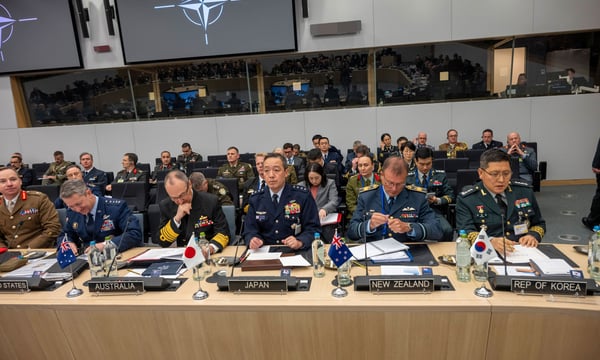
If European allies successfully decouple China from NATO's formal agenda, the practical enforcement burden for technology controls and sanctions on China-Russia dual-use flows shifts entirely to the EU and bilateral channels — neither of which has NATO's collective-commitment architecture.
That gap matters most for export control coordination: without a NATO-level forum, there is no standing mechanism to synchronize member-state enforcement of controls on goods transiting through third countries to Russia with Chinese intermediaries.
European NATO members face a practical choice about how to structure China discussions as the alliance's next Strategic Concept cycle approaches: keep China on the NATO agenda at US insistence, or route those conversations through bilateral or EU frameworks where European economic interests carry more weight.
The argument that NATO's Article 6 geographic scope limits its China mandate gives European capitals a procedural off-ramp that does not require them to openly break with Washington on China policy. If the administration presses NATO to sharpen its China language at the next summit, France and Germany will likely invoke exactly this framing to resist.
Has the current US administration formally indicated whether it intends to push for stronger China language in NATO's next Strategic Concept, or is the China-at-NATO agenda being driven primarily by the previous policy momentum?
Fault Lines
Strategic intelligence, synthesized daily — with a public track record. Every call graded against what actually happened.