Shield AI Unveils X-BAT AI-Piloted VTOL Fighter; Autonomous Carrier Recovery Capability Enters Flight Test Phase
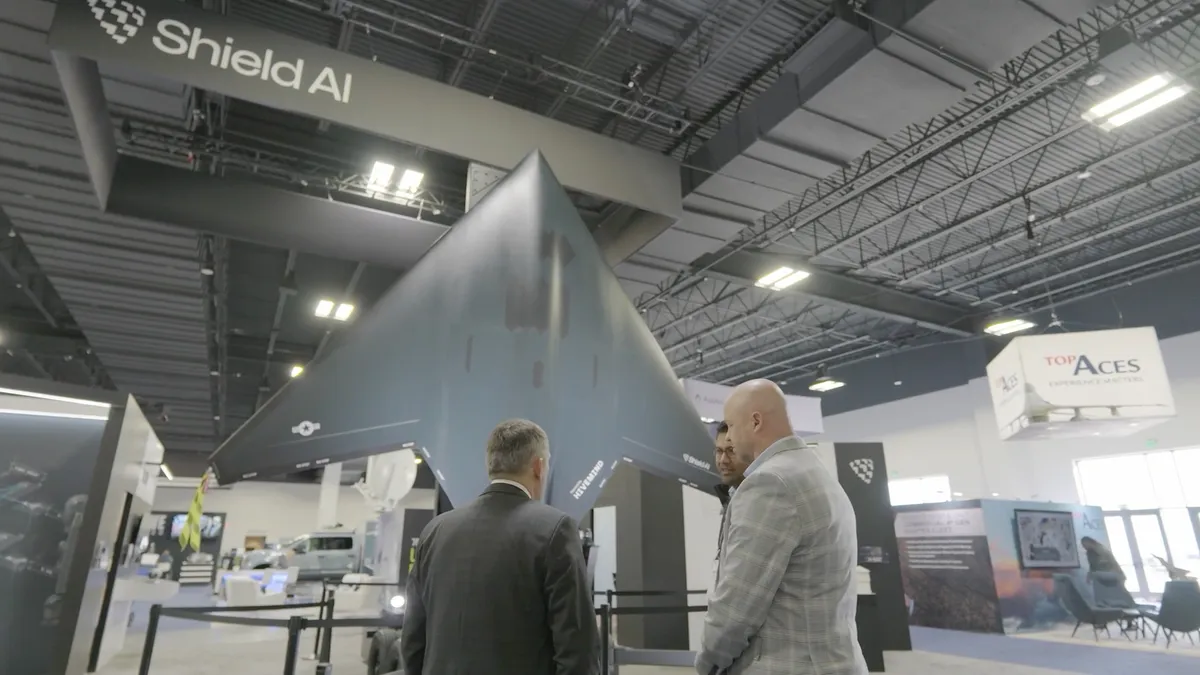
Successful autonomous carrier recovery directly reduces the pilot training and certification pipeline that currently constrains small-deck frigate deployments. If the X-BAT achieves this, it creates a procurement pressure on Navy rotorcraft programs (V-22, CMV-22B, and future VTOL requirements) to justify human-in-loop costs and training overhead.
This forces a capability-versus-manning trade-off in expeditionary air wings, particularly for high-risk environments where pilot attrition or capture is a planning factor.
If Shield AI achieves reliable autonomous carrier recovery—historically the highest-risk evolution in naval aviation—this removes a critical certification and training bottleneck that has constrained VTOL adoption in expeditionary operations.
The demonstration suggests autonomous flight control in contested electromagnetic environments is transitioning from simulation to hardware validation. However, the article provides no evidence of Navy procurement interest, integration timelines, or competitive positioning against manned VTOL platforms (V-22, future CMV-22B variants).
Without those details, this reads as a technology milestone, not yet a force-structure decision. Watch for follow-on contract activity and whether this influences Navy's small-deck frigate air capability roadmap.
The article does not specify: (1) whether this is a demonstrator or a development contract; (2) funding source (private, DARPA, Navy); (3) whether the Navy or other services have expressed interest or issued requirements; (4) how the X-BAT's payload, endurance, and speed compare to existing VTOL or...
Fault Lines
Strategic intelligence, synthesized daily — with a public track record. Every call graded against what actually happened.