Army Seeks Spectrum Operations at Machine Speed; Industry RFI Signals Automation Pivot
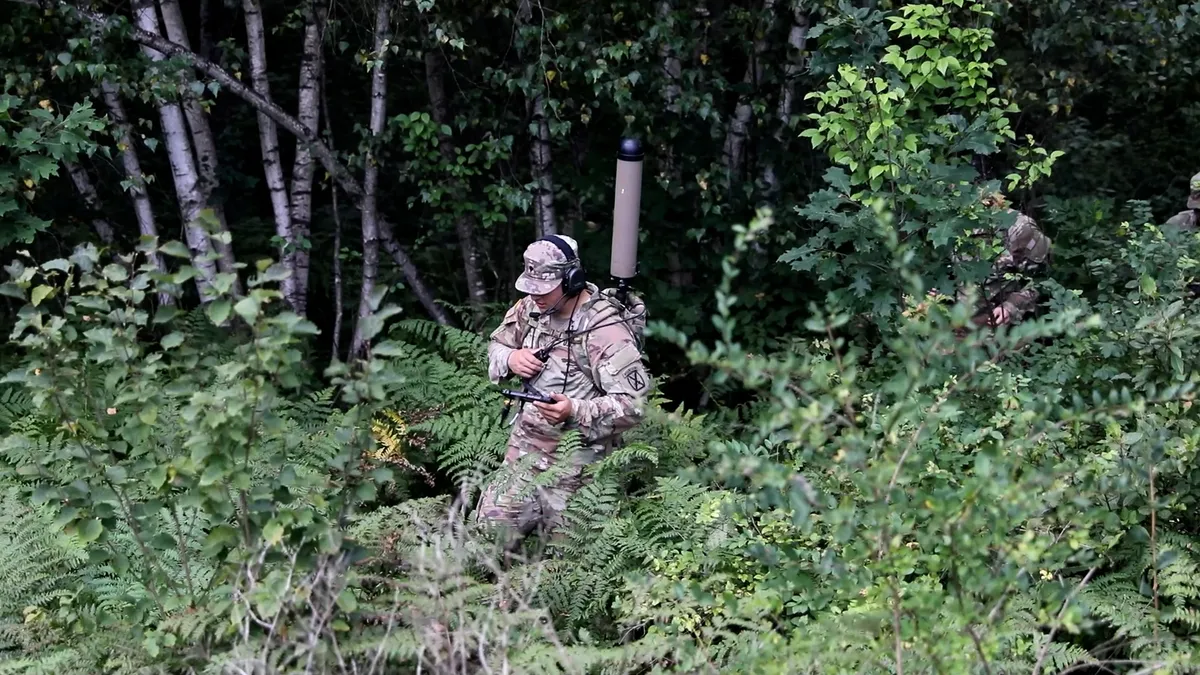
Autonomous spectrum operations compress the sensor-to-shooter cycle below human reaction time, forcing allied air defense and EW architectures to assume contested RF environments where manual frequency hopping and retune cycles fail.
This RFI, if it matures into a fielded capability, will reshape Pacific Command's air defense doctrine and force NATO to accelerate spectrum-sharing interoperability standards — currently a source of friction in NATO exercises where U.S. and allied radars cannot rapidly coordinate frequency allocation under jamming.
This RFI indicates the Army is moving from manual spectrum management toward autonomous/AI-driven EMS operations — a capability gap exposed in peer competition with Russia and China, both of which have invested heavily in automated spectrum warfare.
The shift forces defense primes (Raytheon, L3Harris, Northrop, General Dynamics) to accelerate EMS software stacks and real-time decision algorithms, likely pulling R&D and procurement dollars from legacy radio modernization programs.
Success depends on whether the Army defines 'machine speed' as millisecond-latency decision-making (requiring edge computing and pre-positioned AI models) or second-scale automation (achievable with current cloud architectures) — a distinction that determines which vendors can compete and what integration timelines look realistic.
The article does not specify the RFI scope (EMS sensing, jamming, spectrum sharing, or all three), funding envelope, or whether this is a single-award or multiple-award contract vehicle.
Fault Lines
Strategic intelligence, synthesized daily — with a public track record. Every call graded against what actually happened.