US Pivots to Three In-Service Virginia Subs for Australia; Delays New-Build AUKUS Variant
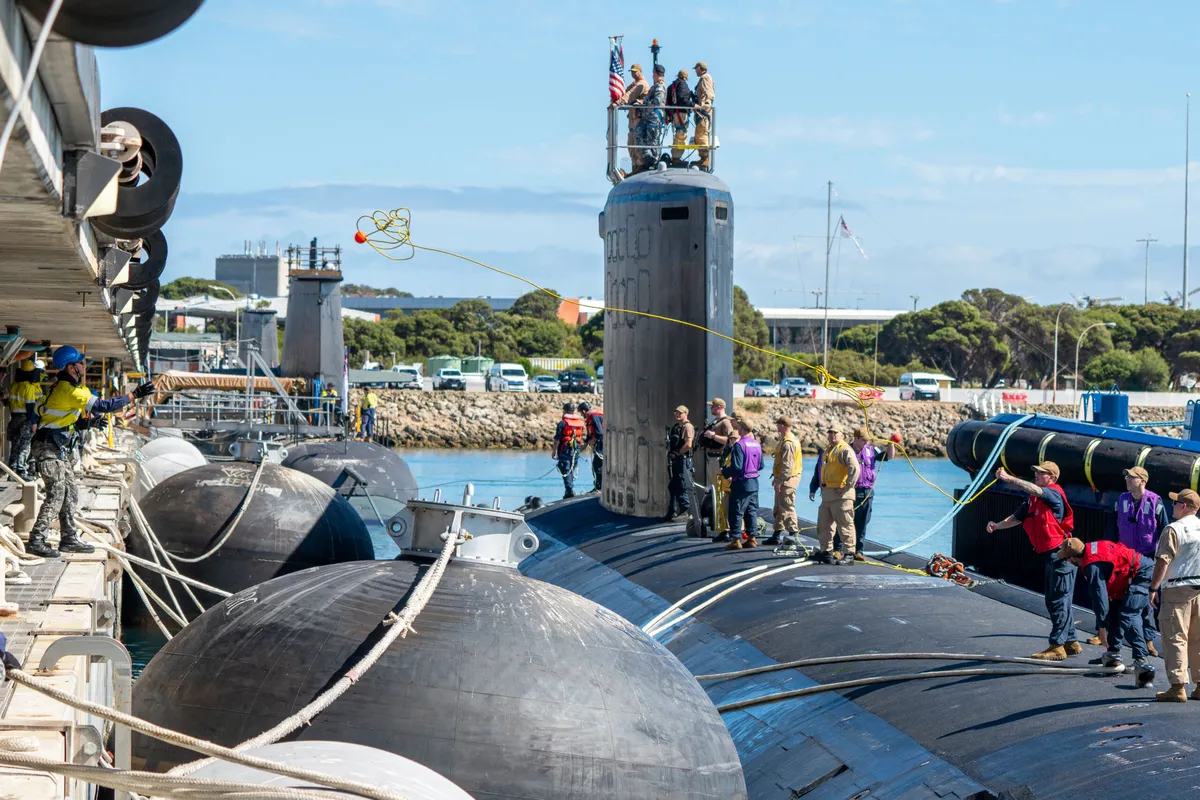
The move signals that AUKUS submarine ambition is outpacing industrial reality. Three in-service boats mean Australia's submarine fleet ages faster — those hulls will require mid-life refueling and overhaul in the early 2030s, exactly when SSN-AUKUS is supposed to enter service.
If the variant slips, Australia faces a decade-long gap where its only options are sustainment of aging Virginias or emergency acquisition of additional US hulls at premium prices. Newport News' Virginia production rate (roughly one boat per 18 months) is already allocated: two per year to the US Navy, periodic transfers to allies, and now three to Australia. That leaves zero margin for the SSN-AUKUS ramp.
This accelerates AUKUS submarine basing but defers the SSN-AUKUS co-production variant — the core industrial commitment that was supposed to anchor the alliance's naval shipbuilding claim.
Australia gets hulls faster (in-service boats can deploy sooner than new construction), but the US and UK lose the opportunity to demonstrate that AUKUS partners can jointly design and build attack submarines. Newport News and BAE Systems were betting on SSN-AUKUS production contracts.
If Australia is now taking mature Virginias instead, the industrial case for the variant weakens — fewer customers, lower production volumes, delayed ROI on the design work already sunk. The 2027 Submarine Rotational Force-West deployment timeline (set Friday) now depends on three older, higher-maintenance platforms rather than new construction with extended service lives.
Did Australia's budget constraints force this shift, or did US Navy capacity — Virginia-class production is already committed to US force structure and allied commitments — make new-build SSN-AUKUS unaffordable?
Fault Lines
Strategic intelligence, synthesized daily — with a public track record. Every call graded against what actually happened.