Pentagon Counter-Drone Task Force Warns Unmanned Threat Exceeds GWOT IED Scale
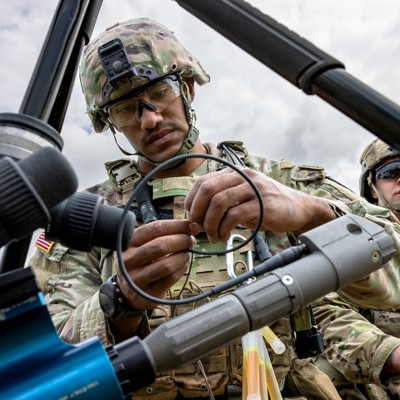
Ross's statement directly drives two procurement decisions: First, supplemental funding requests to accelerate C-UAS procurement for FY2026 will likely appear in the next DoD budget amendment or emergency appropriation, forcing competition between Raytheon, Northrop, and emerging vendors for rapid deployment contracts.
Second, the requirement to protect fixed bases (Al Udeid, others in CENTCOM) against drone swarms will accelerate integration of air defense systems currently in development — specifically layered defenses combining short-range systems (Coyote), mid-range (Avenger), and network coordination, which in turn affects sustainment contracts for existing air defense platforms (Patriot, THAAD) that must now operate in a multi-threat environment.
This is an assessment of emerging force protection requirements during active combat operations, not a strategic forecast.
Ross is describing a current operational challenge — troops in theater face drone threats that require fielded counter-measures now. The statement reflects real-time adaptation to Iranian drone tactics observed over the past 72 hours of strikes on Al Udeid and other bases.
What matters for procurement: this signals demand for fielded air defense systems (short-range, mobile, networked) to protect forward bases and convoys. Contractors supplying counter-UAS (C-UAS) systems — Raytheon (Coyote, Phantom), Northrop (Counter-UAS), Dedrone, AeroVironment — will see accelerated fielding timelines and potential supplemental funding requests.
The constraint is not manufacturing capacity but integration speed: these systems must deploy to CENTCOM within weeks, not months.
The article does not specify which counter-drone systems are currently deployed to CENTCOM, which units lack coverage, or what the Pentagon estimates as the required inventory to meet Ross's threshold.
Fault Lines
Strategic intelligence, synthesized daily — with a public track record. Every call graded against what actually happened.