F-22 Deployment to Israel Signals Imminent Iran Air Campaign Planning
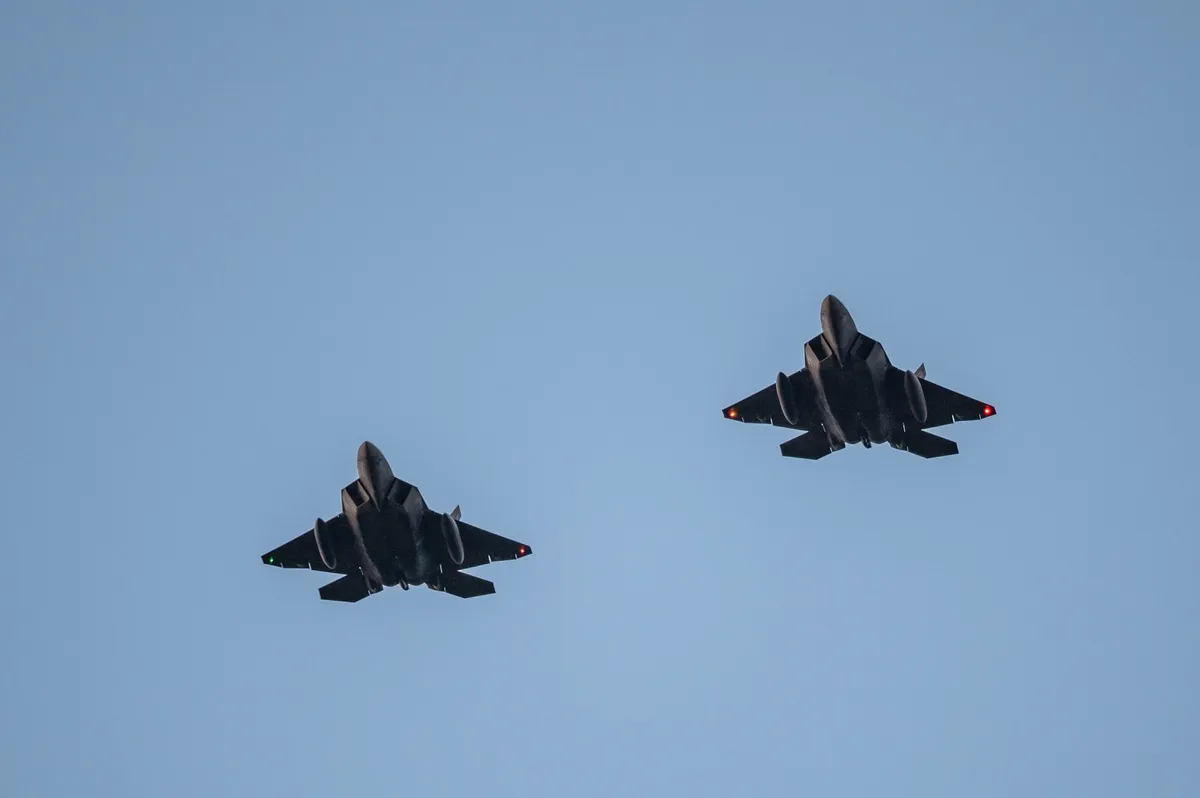
F-22 deployment to Israel for Iran contingencies removes those airframes from Pacific Command rotational schedules, forcing a reallocation of 5th-gen air superiority capacity away from China deterrence operations.
Simultaneously, F-35 and F-15E movements to Europe against a potential Iranian response scenario compete for the same munitions production lines (AIM-120D, GBU-31, AGM-158 JASSM) that support NATO modernization and Taiwan contingency planning.
If the Iran air campaign proceeds, RTX and Lockheed Martin face a 6-12 month munitions production surge that will either delay allied F-35 block deliveries or require supplemental appropriations — either outcome forces a choice between Middle East operations and Indo-Pacific deterrence investment.
F-22 deployment to Israel for potential combat operations against Iran represents a concrete escalation beyond deterrence posturing.
The F-22's presence signals the administration is preparing for high-threat air operations where air superiority is non-negotiable — Iran's air defense network (S-300/Khordad systems) requires 5th-gen capability to suppress effectively.
This forces three immediate decisions: (1) Lockheed Martin and RTX will face surge demands for F-22 spare parts and munitions (AIM-120D, AIM-9X), compressing inventory across Pacific Command; (2) Israel's air force integration timeline for F-22 support (maintenance, targeting data-link protocols) will determine operational readiness windows — delays here directly constrain strike windows; (3) European F-35/F-15E positioning suggests contingency planning for regional escalation (e.g., Iranian retaliation against Gulf allies or Israel), locking allied fighter availability away from other theaters for months.
The critical unknown is whether this is credible strike planning or signaling leverage in negotiations — that distinction determines whether this drives actual procurement acceleration or remains a temporary posture.
The article does not specify how many F-22s were deployed, which aircraft models of F-35s and F-15Es are moving to Europe, or the timeline for these movements. It also does not clarify whether these deployments are temporary rotations or sustained positioning, which determines industrial impact.
Fault Lines
Strategic intelligence, synthesized daily — with a public track record. Every call graded against what actually happened.