Pentagon Accelerates PRSM Production via Lockheed Martin; Supply Chain Mobilized Mid-Conflict
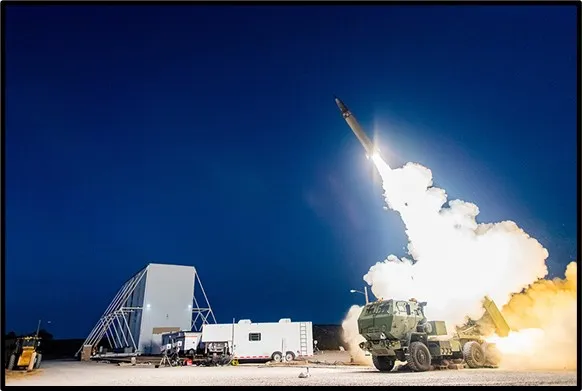
Active missile consumption in the Iran theater (Israeli strikes on Tehran, Iranian retaliatory waves, US Bushehr strike on March 24) creates immediate demand signal for US-supplied precision munitions to allied forces and US operations. Accelerated PRSM production feeds both: resupply of Israel's inventory and forward-deployed US stocks for potential follow-on strikes.
The production ramp also signals confidence that the conflict will extend beyond the March 23 Trump five-day strike pause—otherwise, a peacetime production timeline would suffice. If PRSM acceleration requires diversion of BAE/Honeywell capacity from other missile programs (JDAM, AGM-88, Tomahawk), this creates downstream competition for shared component suppliers.
PRSM is the Army's primary deep-strike weapon; acceleration signals operational demand is outpacing inventory.
Timing matters: this occurs as the Iran conflict has entered direct capital-level targeting (Tehran strikes on March 23), expanded to Iraqi militia (March 24), and triggered 82nd Airborne deployment (March 24). The agreement suggests either pre-positioned demand forecasting or response to observed consumption rates in the current theater.
Without production numbers or delivery schedules, the signal is that procurement velocity is rising — but the magnitude and timeline remain opaque. Lockheed's margin structure on PRSM will determine whether this acceleration absorbs cost or passes it to other programs.
The article omits contract value, production rate increase (units/month), delivery timeline, and whether this acceleration is funded within existing FY2026 budgets or requires supplemental appropriation.
Fault Lines
Strategic intelligence, synthesized daily — with a public track record. Every call graded against what actually happened.