Russian Drone Incursion Near French Carrier in NATO Port Tests Alliance Air Defense
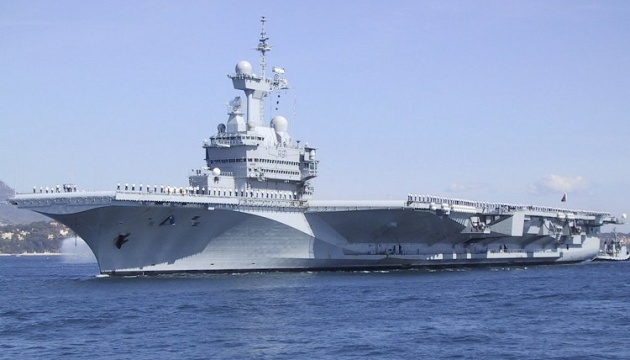
Russian reconnaissance of allied carriers in NATO ports during exercises creates two procurement cascades: (1) it justifies allied investment in integrated air defense systems for port security and carrier operations, likely benefiting Thales (France's Aster system integrator), MBDA (naval point defense), and Raytheon (Evolved Sea Sparrow); (2) it forces allied exercise planners to allocate more air defense assets to carrier protection during future drills, reducing available capacity for other NATO training objectives and potentially extending exercise timelines.
If confirmed, this marks the first reported Russian ISR probe of a NATO capital ship in a NATO-allied port during active exercise operations.
The timing and location — a Swedish port hosting French naval assets during NATO drills — suggests deliberate reconnaissance rather than routine activity. For procurement: this validates demand for integrated air defense systems on carriers and in port facilities, potentially accelerating Swedish and allied orders for short-range air defense (SHORAD) or naval point-defense upgrades.
For force posture: it signals Russian willingness to conduct surveillance operations in high-visibility NATO settings, which may drive allied decisions to increase carrier escort requirements or expand maritime patrol coverage during exercises. The critical gap is whether NATO air defense systems detected and responded to the drone — that determines whether this becomes a readiness concern or a capability gap.
The article does not specify the drone type, distance of closest approach, which NATO or Swedish air defense systems detected or engaged it, or whether the drone was intercepted or departed unmolested.
Fault Lines
Strategic intelligence, synthesized daily — with a public track record. Every call graded against what actually happened.