Royal Navy Commissions HMS Stirling Castle Minehunting Mothership; Autonomous Systems Replace Crewed Hulls
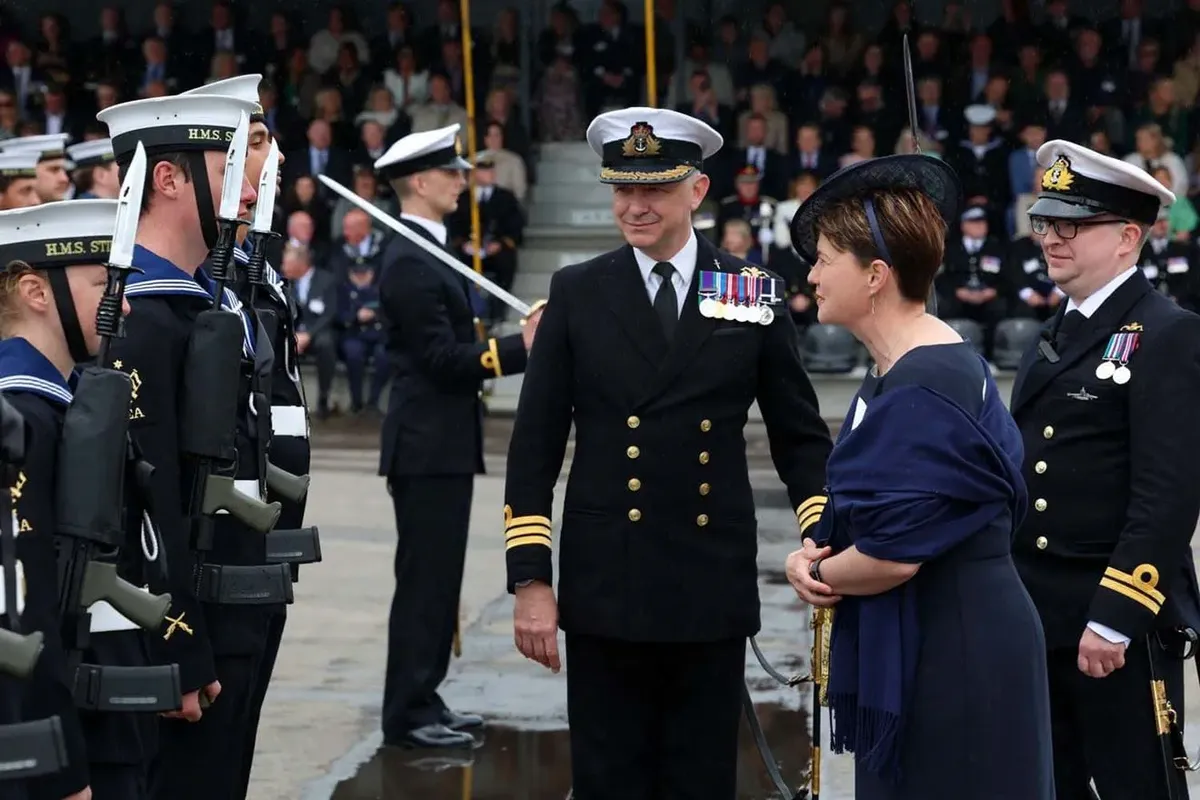
The Stirling Castle's commissioning is incremental for the UK alone, but it arrives as a data point in a broader NATO pattern: allied navies are trading personnel-at-risk for unmanned systems precisely when they lack the surface-combatant mass to escort traditional MCM vessels.
If the Stirling Castle demonstrates 80%+ mission availability in the first 12 months, expect Germany's Rheinland-Pfalz-class and France's Antares-class programs to accelerate procurement of similar motherships.
Conversely, if availability falls below 60%, the cost-per-sortie calculus inverts, and budget-constrained allies will default to extending crewed-hull rotations — which pulls more destroyer and frigate capacity away from high-end warfighting in the Indo-Pacific.
The UK is operationalizing an alternative to crewed minesweepers at the moment when NATO allies face acute mine-warfare risk in the Black Sea and Baltic — and when the US Navy is simultaneously rotating escort assets to the Hormuz corridor, thinning surface-warfare capacity.
For the Royal Navy, this means the Stirling Castle's autonomous payload can sustain MCM operations in contested waters without risking personnel or committing scarce frigates to escort duty. Watch whether other NATO navies (France, Germany, Denmark) accelerate their own autonomous MCM programs in response, or whether budget constraints force them to extend crewed-hull service life instead.
What is the operational endurance of the Stirling Castle's autonomous systems — how many days can the mothership sustain continuous MCM operations without returning to port? And does the Royal Navy have a timeline for integrating these systems into Baltic or Black Sea task forces?
Fault Lines
Strategic intelligence, synthesized daily — with a public track record. Every call graded against what actually happened.