Damaged US Early-Warning Radar Jet Confirms Iranian Strike Capability Against Hardened Targets
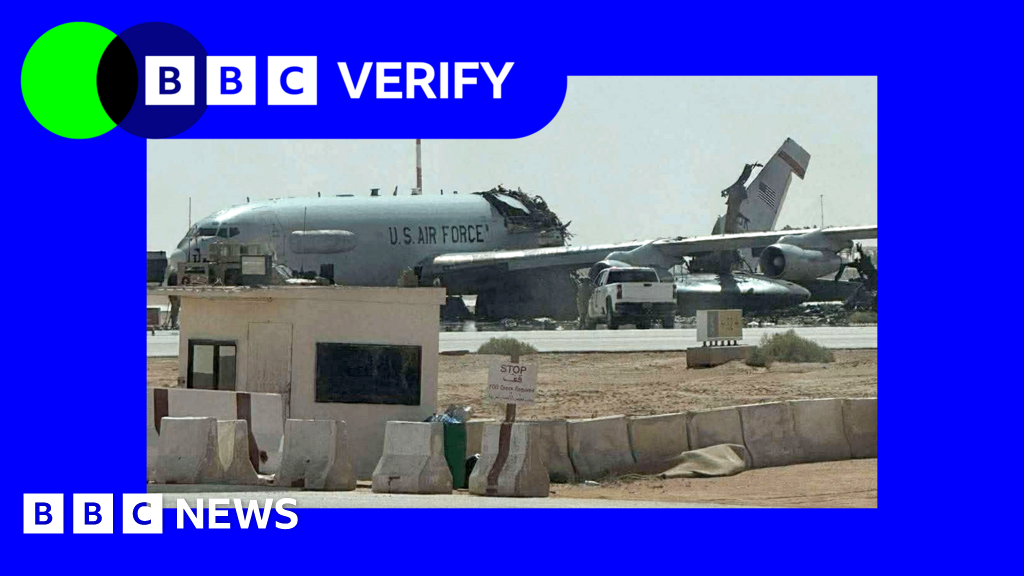
Damage to US ISR platforms compresses the operational tempo available for the Pentagon's ground invasion planning scenario. If AWACS or equivalent early-warning coverage is degraded, air-to-ground coordination for the 10,000-troop deployment option becomes riskier, forcing either longer pre-positioning timelines to restore air dominance or acceptance of higher casualty risk for ground forces.
This shifts the cost-benefit calculation of the invasion contingency toward either delay or heavier air preparation, both of which extend the current strike campaign window and increase civilian casualty exposure in Lebanon and Iraq — a political constraint already visible in allied capitals.
This confirms Iran achieved a secondary objective beyond personnel casualties in the March 27 strike: degradation of US air defense architecture in the Gulf.
Early-warning radar jets (likely E-3 AWACS or similar) are force-multipliers that enable coalition air operations across the region. Damage to these platforms directly reduces US and allied air superiority capability and increases risk to subsequent strike packages — a factor that affects Pentagon planning for the ground operations scenario already under consideration.
If the aircraft is out of service for weeks rather than days, it tightens the operational window for any large-scale US air campaign and may force reliance on alternative ISR platforms with different coverage profiles. The lack of CENTCOM comment suggests either assessment is ongoing or damage is worse than initially disclosed.
The article does not specify which radar platform was struck, the extent of damage (repairable vs. total loss), or how long the aircraft will be unavailable. We also don't know if Iran targeted this asset specifically or if it was collateral damage from a broader strike pattern.
Fault Lines
Strategic intelligence, synthesized daily — with a public track record. Every call graded against what actually happened.