Iranian Drone Strike on 5th Fleet HQ Forces US Navy Operational Reassessment in Gulf
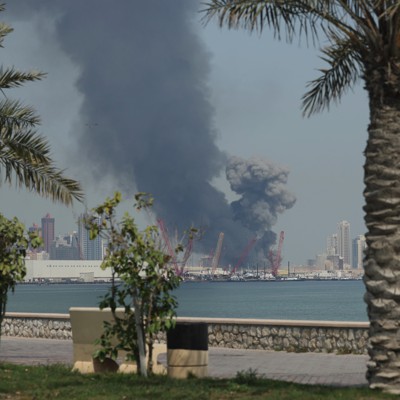
Direct strikes on US command infrastructure force reallocation of naval presence in the Gulf, which compresses the operational window for carrier strike group rotations and stretches logistics tail requirements — this directly impacts Navy force-structure planning for FY27-28 and may accelerate procurement of distributed command systems (autonomous surface vessels, extended-range unmanned ISR).
Simultaneously, if 5th Fleet relocates or degrades its shore-based footprint, allied navies (UK, France, Gulf states) lose coordination hub access, fragmenting the naval coalition and reducing interoperability — this becomes a leverage point in ongoing discussions over basing agreements and allied burden-sharing negotiations.
If confirmed, this marks the first direct Iranian attack on a US military command node in the region since 2020, escalating beyond proxy strikes and signaling willingness to accept direct US retaliation risk.
The immediate consequence is operational — 5th Fleet may relocate command functions, dispersing decision-making authority and complicating real-time maritime control in the Strait of Hormuz during a period of elevated regional tension. This forces a binary choice: accept vulnerability at the current location or absorb the cost and friction of distributed command.
The second-order effect hinges on US response calculus: proportional retaliation risks further escalation; restraint signals constraint. Neither outcome leaves the status quo intact.
The article does not specify: (1) which facilities were damaged or their operational role, (2) whether 5th Fleet command authority was degraded or only support infrastructure, (3) Iranian motivation beyond 'retaliatory' — retaliatory for what specific prior action, (4) whether this was a one-off dem...
Fault Lines
Strategic intelligence, synthesized daily — with a public track record. Every call graded against what actually happened.