Anduril Arsenal-1 Ohio Plant Begins Fury Production; Autonomous Weapons Output Accelerates Amid Active Iran Conflict
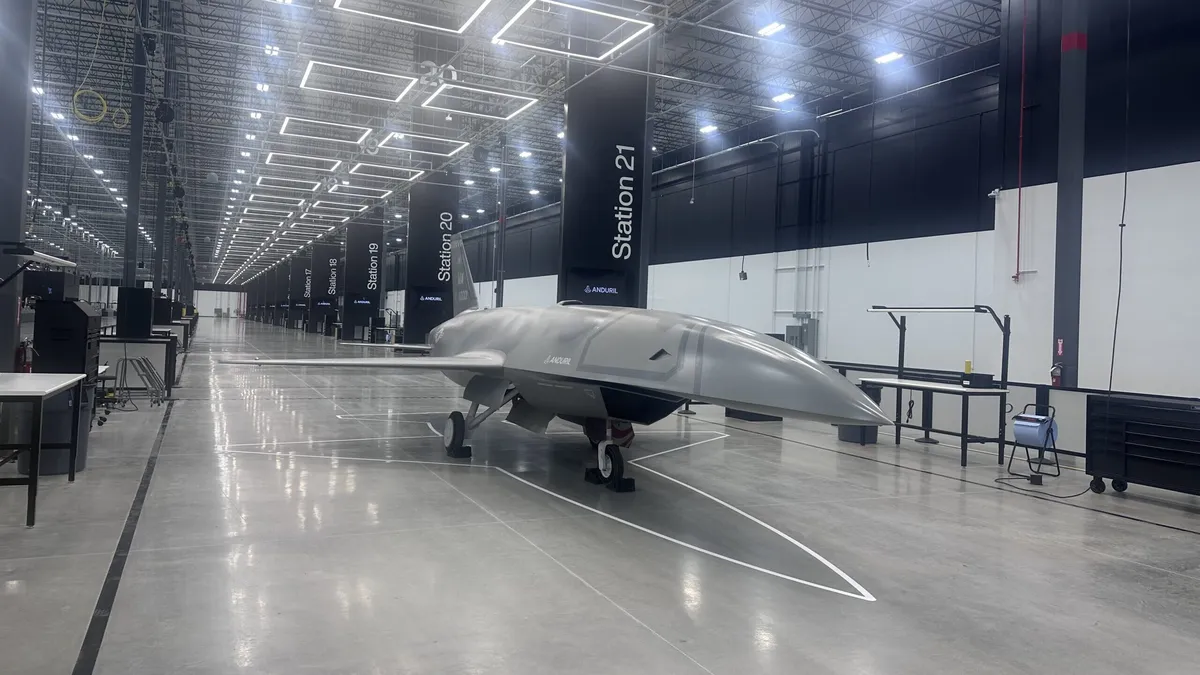
Active Israeli strikes on Iranian infrastructure (March 23) and ongoing Iran-Israel direct targeting cycle create immediate procurement demand for standoff weapons systems. If Anduril can deliver Fury units faster than Lockheed Martin (AGM-158 JASSM) or Raytheon (BGM-109 Tomahawk) variants, the firm captures a narrow window where operational theaters are actively validating loitering munition effectiveness.
This directly competes with Northrop Grumman's RQ-180 and legacy prime sustainment contracts — a market-share shift, not just a production announcement.
Arsenal-1 represents the first dedicated autonomous weapons manufacturing facility outside legacy primes, accelerating output of loitering munitions during active US-Israel strikes against Iran.
The timing amplifies procurement urgency: if Fury production ramps faster than traditional platforms, Anduril gains a competitive edge in a market now operating under combat-validated demand signals. However, the article provides no production volume targets, timeline specifics, or cost structure — critical data for assessing whether 'different approach' means cost reduction, speed-to-volume, or modularity.
Without those details, the strategic advantage remains unclear.
The article does not specify production volume targets, unit costs, delivery timelines by platform, or how the 'different production approach' differs from competitors (e.g., modular assembly vs. traditional flow production, automation levels, or supply chain integration).
Fault Lines
Strategic intelligence, synthesized daily — with a public track record. Every call graded against what actually happened.