Boeing Opens Dedicated EOIR Sensor Line for Space Force Missile Warning
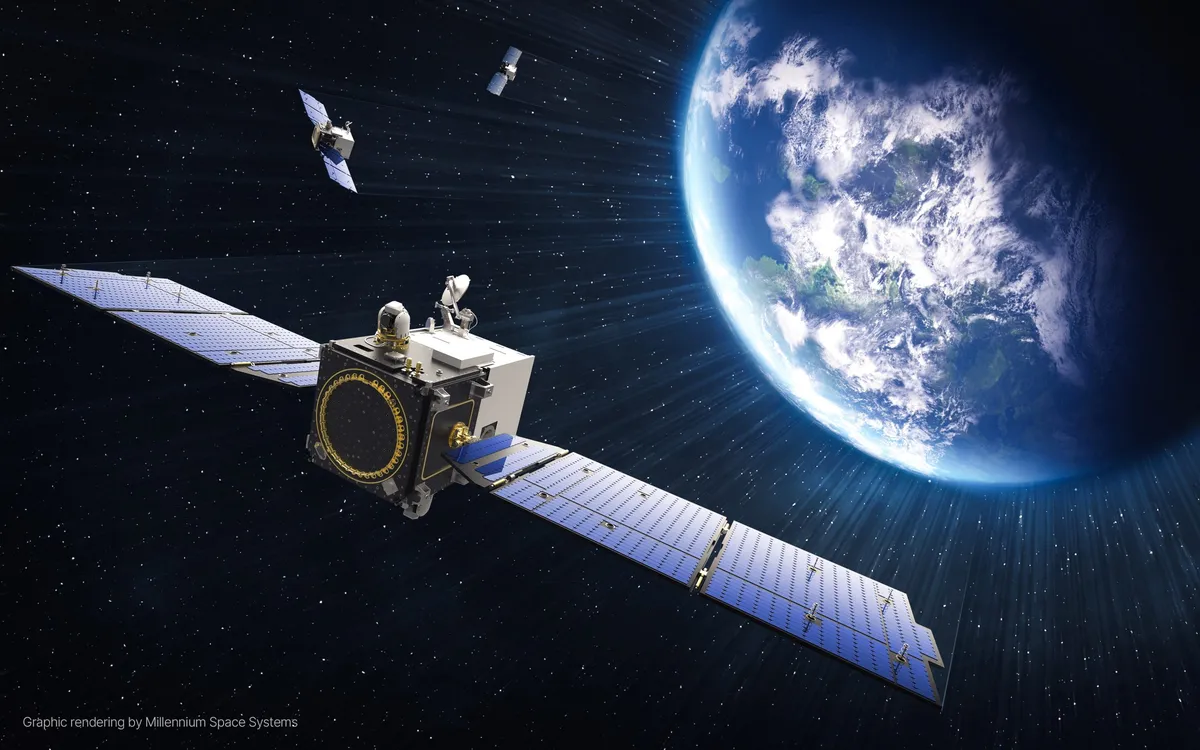
Dedicated production capacity for missile-warning sensors accelerates the Space Force's ability to field NGOPIR constellation replacements, which directly affects the timeline for retiring aging Defense Support Program satellites and closing gaps in early-warning coverage over peer-competitor missile ranges (China, Russia).
If Boeing's line reaches full capacity ahead of Northrop's competing efforts, it could force the Space Force to consolidate EOIR sensor procurement with Boeing, reducing supplier redundancy and increasing single-source risk—a concern for sustainment and modernization flexibility over the 15-20 year satellite lifecycle.
The line expansion signals Boeing is betting on sustained demand for space-based missile warning sensors, likely tied to the Space Force's Next-Generation Overhead Persistent Infrared (NGOPIR) program or related early-warning constellation efforts.
For Boeing investors, this represents capital deployment into a niche, high-margin sensor segment with long procurement cycles and limited competition (Northrop Grumman is the primary alternative). The constraint is visibility: without announced contracts or production rates, this could range from a modest capacity hedge to a material revenue driver.
Watch whether this line fills within 18-24 months or sits underutilized—that will reveal whether demand forecasts are real or aspirational.
The article does not disclose: (1) production capacity or annual unit targets, (2) whether this line is tied to a specific Space Force contract award or program phase, (3) timeline to full operational status, (4) whether 'other customers' includes international allies or only U.S. government, or (5)...
Fault Lines
Strategic intelligence, synthesized daily — with a public track record. Every call graded against what actually happened.