Kessel Run Launches Next-Gen Air Operations Center — Accelerates Command Software Modernization
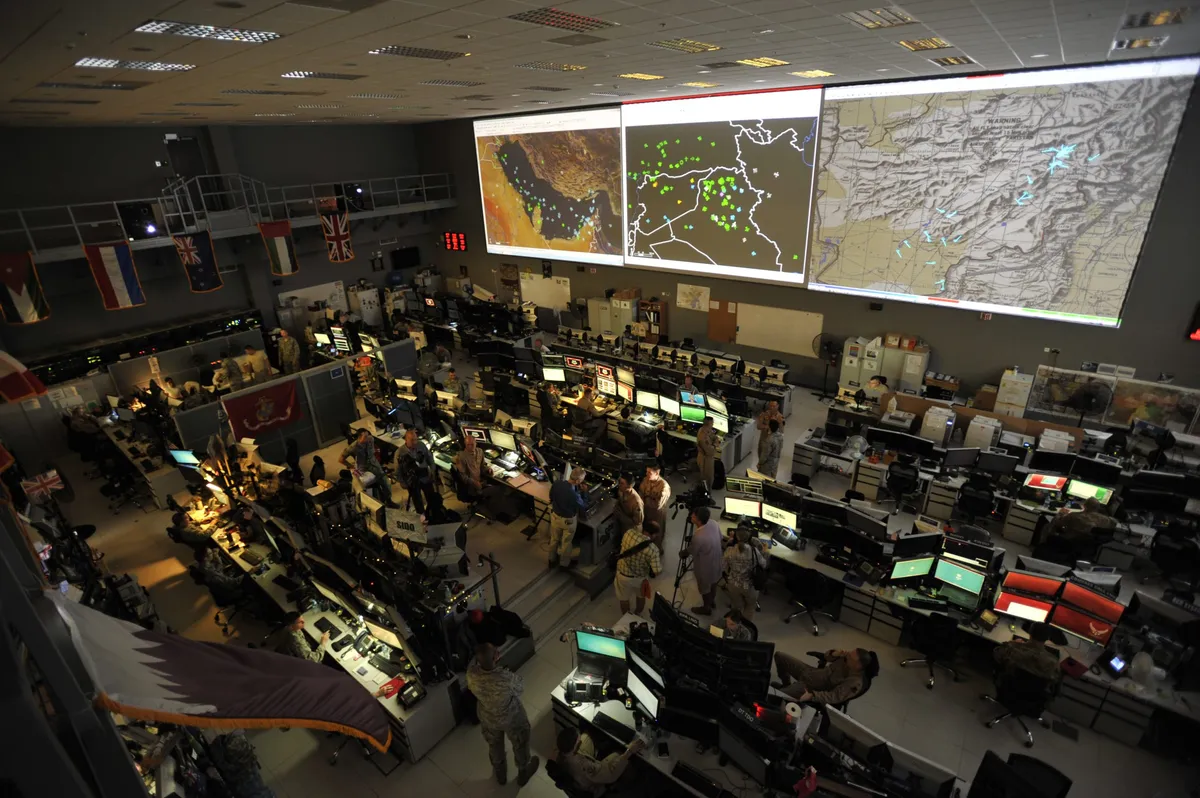
AOC modernization directly affects the timeline for contested operations in the Indo-Pacific.
A compressed development cycle that delivers cloud-native, low-latency command systems 18–24 months earlier than legacy acquisition would allow Pacific Command to field dynamic air tasking capabilities before peer competitors complete their own command-center upgrades — a measurable advantage in rapid force allocation during a Taiwan contingency.
Conversely, delays or architectural mismatches with JADC2 integration standards could leave distributed squadrons unable to share real-time targeting data, degrading the very multi-domain coordination the modernization aims to enable.
This confirms the Air Force is formalizing a major modernization of its command-and-control infrastructure — a shift from legacy systems that have constrained real-time coordination across distributed operations.
AOCs are the backbone of theater air tasking order generation and dynamic re-routing; upgrading them directly affects how quickly the service can execute contested operations and adapt to peer-competitor threats.
The choice to house this effort in Kessel Run (the Air Force's agile software factory) rather than traditional acquisition signals an attempt to compress development timelines and iterate faster than conventional programs.
However, without visibility into budget, contractor selection, or technical requirements, we cannot yet assess whether this represents a meaningful acceleration or repackaging of existing initiatives.
The article does not disclose: program budget, development timeline, whether existing contractors (Boeing, Northrop, Lockheed) are competing or already assigned, technical requirements (cloud-native architecture, AI integration, multi-domain interoperability), or integration dependencies with other...
Fault Lines
Strategic intelligence, synthesized daily — with a public track record. Every call graded against what actually happened.